Warm up
2 minutes of double unders
Bucket work
Reverse hyper
Kick up to hand stand
Skill
Weighted pull ups
WOD
3 rounds of:
200m sprint
5 weighted pull ups


Warm up
2 minutes of double unders
Bucket work
Reverse hyper
Kick up to hand stand
Skill
Weighted pull ups
WOD
3 rounds of:
200m sprint
5 weighted pull ups
Warm up
Net climbs
Toes to rings
Pull over to support
GHD back ext
Skill
Yoke walk
WOD
3 attempts
10m max weight yoke walk
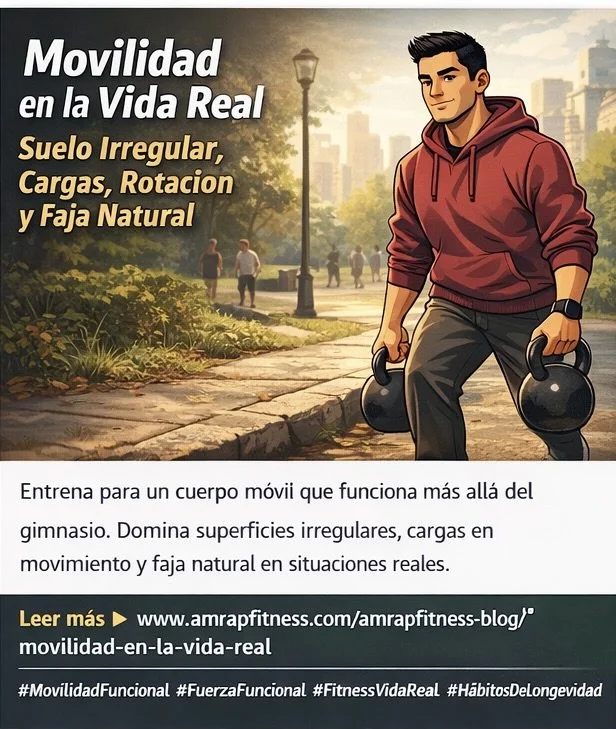
Mucha gente cree que movilidad = flexibilidad.
Tocar los pies. Abrir caderas. Estirar isquios. Mantener posturas.
Pero la vida real no te pide movilidad en una colchoneta.
La vida real te pide estabilidad cuando:
la acera está irregular
tienes las manos ocupadas
giras rápido
estás cansado
cargas peso incómodo
bajas un escalón sin pensarlo
Por eso la meta no es solo “más rango.”
La meta es rango usable.
Rango que se mantiene estable bajo carga.
Eso es lo que te permite entrenar y vivir sin miedo constante a “lastimarte con cualquier cosa.”
La gente recuerda este momento.
No un levantamiento pesado. No un WOD.
Un día normal.
Bajas un bordillo cargando bolsas. El pie cae medio torcido. La rodilla se mueve. La espalda se tensa.
O giras para agarrar algo en el carro. Y tu columna te manda ese aviso:
“Eso no.”
O caminas en suelo irregular y tu tobillo se siente inseguro.
Y te das cuenta:
Has hecho “movilidad”…
pero no has entrenado las demandas reales.
No es tu culpa.
Gran parte del consejo de movilidad está hecho para verse bien, no para sostenerse.
No es solo rango.
Es una ecuación de 3 partes:
Rango — ¿puedes llegar a la posición?
Control — ¿puedes dominarla (lento, estable, confiado)?
Tolerancia a la carga — ¿puedes sostenerla bajo demanda real?
Si falta una, no se transfiere.
Movilidad real es:
moverte en rango con control
con el tronco organizado
sin que las articulaciones “entren en pánico”
Eso protege:
rodillas
caderas
columna
tobillos
hombros
Y sostiene independencia.
Estirar puede aumentar rango.
Pero las lesiones no llegan porque el isquio era “corto.”
Llegan cuando:
el pie pisa irregular y no estabilizas
rotas con fatiga sin bracing
cargas peso y la columna colapsa
te mueves rápido sin control
Falta capacidad.
Capacidad se construye con:
fuerza en rangos finales
estabilidad mientras te mueves
carga progresiva
Las cargas (carries) son clave porque:
activan tronco mientras caminas
entrenan bracing sin sobrepensar
construyen coordinación bajo carga
Investigación sobre activación muscular en variaciones de loaded carries muestra demandas relevantes para tronco y piernas durante locomoción — estabilidad en movimiento.
Caminar en terreno irregular cambia patrones de marcha y exige más control. Eso no es un problema: es el objetivo.
La evidencia en marcha indica que el terreno irregular incrementa la complejidad y requiere mayor adaptabilidad, especialmente con la edad.
Traducción: Si solo entrenas en superficies perfectas…
la vida real será tu primera prueba.
No hacemos eso.
Lo entrenamos.
Después de los 40, muchas personas tienen:
historial de lesiones
poca tolerancia a “molestias inesperadas”
menos tiempo para recuperarse
El enemigo no es el trabajo duro.
El enemigo es el dolor impredecible.
El dolor impredecible mata consistencia.
Y consistencia es el verdadero motor de longevidad.
Te lastimas con un movimiento normal.
Pierdes confianza.
Te vuelves cauteloso.
Te mueves menos.
Te pones más rígido.
Haces estiramientos al azar.
Te sientes peor.
La solución es:
más control
más capacidad
más exposición progresiva
Si el pie no se adapta, todo arriba paga.
Drills (2–3x/semana):
short‑foot: 3 x 10–20 s/lado
elevación de gemelo lenta: 2–3 x 8–12
tibialis raises: 2 x 10–15
equilibrio a una pierna: 2 x 20–40 s
Regla: no persigas tambaleo; persigue control.
Muchos problemas aparecen bajando:
escaleras
bordillos
bajadas
Progresión (2x/semana):
step‑down bajo 3 x 6–8/lado
excéntrico lento
pie silencioso
Cues:
pie trípode
rodilla sobre medio pie
torso alto
La vida real está llena de cargas incómodas.
Menú (2x/semana):
farmer carry
suitcase carry
front/hug carry
Prescripción:
4–6 rondas
30–45 s
postura alta, costillas apiladas, respiración baja
Regla: Si suben hombros o se abren costillas, está pesado.
La gente se lastima girando con fatiga.
Entrenamos:
rotación controlada
anti‑rotación
Par (2x/semana):
Pallof press arrodillado 3 x 8–10/lado
chop/lift en medio arrodillado 2–3 x 8/lado
Cues:
exhala para apilar costillas
caderas quietas
Aquí la movilidad se vuelve confiable.
Opciones (1–2):
iso split squat 2 x 20–30 s/lado
Cossack con apoyo 2 x 5/lado
bisagra a una pierna con alcance 2 x 6/lado
Regla: sin dolor; domina el rango.
Farmer carry 4 x 30–45 s
Step‑downs 3 x 6–8/lado
Pallof press 3 x 8–10/lado
Bisagra a una pierna 2 x 6/lado Final: caminata suave 5 min
Progresión: una variable a la vez.
5–10 min varias veces por semana:
pasto
sendero
acera irregular segura
Regla: lento, controlado.
Estirar sin control → fuerza en rango final
Gimnasia de inestabilidad → base estable primero
Cargar pesado temprano → postura manda
Ignorar pie/tobillo → base manda
Solo superficies perfectas → exposición progresiva
¿Me siento inseguro en suelo irregular?
¿Cargar peso me tensa la espalda?
¿Evito rotar porque se siente riesgoso?
¿Bajo un escalón con control y silencio?
¿Con fatiga colapsa mi postura?
No es juicio.
Es plan.
Movilidad real es:
rango con control
bajo carga
en ambientes reales
Eso te hace:
constante
confiado
anti‑frágil
No solo flexible.
Preparado.
Ellestad SH, et al. Patrones de activación muscular durante variaciones de cargas caminando (loaded carries). 2024. (Acceso abierto) https://pmc.ncbi.nlm.nih.gov/articles/PMC11042841/
Inns TB, et al. Adaptaciones de la marcha en superficies uniformes vs. irregulares según la edad. 2025. https://www.frontiersin.org/journals/aging/articles/10.3389/fragi.2025.1573778/full
Zurales K, et al. Marcha en suelo irregular y relación con caídas/resultados relevantes a lesión. 2016. (Acceso abierto) https://pmc.ncbi.nlm.nih.gov/articles/PMC4670600/
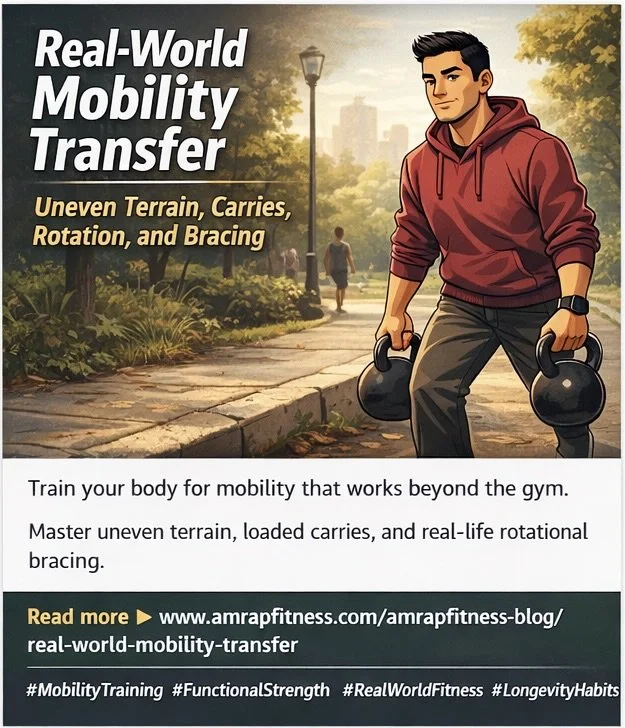
Most people think mobility is a “flexibility” thing.
Touch your toes. Open your hips. Stretch your hamstrings. Hold a pose.
But real life doesn’t ask you to perform mobility on a yoga mat.
Real life asks you to be stable when:
The sidewalk is uneven
your hands are full
you’re turning fast
you’re tired
you’re carrying awkward weight
you’re stepping down without thinking
That’s why the goal isn’t simply “more range.”
The goal is a usable range.
Range that stays stable under load.
Because that’s what keeps you training, moving, working, and living without the constant fear of “tweaking something.”
This entry is about mobility that actually transfers — and how to build it like a professional.
Here’s the moment people remember.
Not a heavy lift. Not a tough workout.
A normal day.
You step off a curb carrying bags. Your foot lands half‑angled. Your knee shifts. Your back tightens.
Or you twist to reach something in the car. And your spine gives you that warning signal:
“Don’t do that again.”
Or you’re walking on uneven ground and your ankle feels uncertain.
And suddenly you realize:
You’ve been doing “mobility”…
…but you haven’t trained real‑world movement demands.
That’s not your fault.
Most mobility advice is built for how things look — not how they hold up.
Real‑world mobility is not just range.
It’s a 3‑part equation:
Range — can you access the position?
Control — can you own it (slow, stable, confident)?
Load tolerance — can you hold it under real demands?
If any one piece is missing, the “mobility” doesn’t transfer.
Real‑world mobility is the ability to:
move through range with control
while the trunk stays organized
and the joints don’t panic under load
That’s how you protect:
knees
hips
spine
ankles
shoulders
And it’s how you stay independent.
Stretching can increase range.
But life doesn’t injure you because your hamstring was “short.”
Life injures you when:
your foot hits an uneven surface and you can’t stabilize
you rotate under fatigue without bracing
you carry load with a spine that collapses
you move fast with joints that don’t have organized control
So the missing ingredient is not more stretching.
It’s capacity.
Capacity is built through:
controlled strength in end ranges
stability while moving
progressive loading
That’s what makes mobility usable.
Loaded carries are a simple, underrated tool because they:
create trunk activation while you move
train bracing without overthinking
build whole‑body coordination under load
Research examining muscle activation in loaded carry variations supports that these movements meaningfully challenge trunk and lower‑limb musculature during locomotion — essentially “stability practice while moving.”
Walking on uneven surfaces changes gait patterns and increases stability requirements. That’s not a problem — that’s the training target.
Evidence in gait research shows that uneven terrain increases the complexity of walking demands and can require greater control and adaptability, especially as people age.
Translation: If your training only happens on perfect, flat surfaces…
real life becomes the first time you test real life.
We don’t do that.
We train it.
After 40, people often have:
a history of old injuries
lower tolerance for “random tweaks”
less time to recover from flare‑ups
Which means the enemy is not “hard work.”
The enemy is unpredictable pain.
Unpredictable pain kills consistency.
And consistency is the real longevity lever.
So our goal is to build movement that stays strong under:
fatigue
rotation
carrying
uneven ground
awkward positions
That’s real mobility.
Here’s what I see all the time:
Someone tweaks something in a normal movement.
They lose trust.
They become cautious.
They move less.
They get stiffer.
Their “mobility work” becomes random stretching.
They feel worse.
This is a spiral.
And it’s the opposite of anti‑fragile.
The solution isn’t more fear.
It’s more control, more capacity, and more progressive exposure.
We’re going to build transfer in layers.
If the foot can’t adapt, everything above pays.
Short‑foot holds: 3 x 10–20 seconds/side
Calf raises (slow): 2–3 x 8–12
Tibialis raises: 2 x 10–15
Single‑leg balance: 2 x 20–40 seconds
Pro rule: Do balance barefoot sometimes (if safe), but do not chase wobble. Chase control.
Most real‑life knee issues show up when stepping down:
stairs
curbs
downhill surfaces
So we train the skill.
Low step‑down (3–6 inches)
3 x 6–8/side
slow eccentric
quiet foot
Increase height gradually as control stays clean.
Key cues:
tripod foot (big toe, little toe, heel)
knee tracks over mid‑foot
torso stays tall
This is “real life knee insurance.”
Most people think bracing is only for heavy lifting.
But real life is full of awkward loads:
groceries
kids
luggage
moving boxes
So we train bracing while moving.
Farmer carry (both hands)
Suitcase carry (one hand)
Front carry (hug carry)
Prescription:
4–6 rounds
30–45 seconds
posture tall, ribs stacked, breathe low
Rule: If your shoulders creep to your ears or your ribs flare, the load is too heavy.
People get hurt twisting, not stretching.
Because rotation under fatigue often happens without trunk control.
We train two things:
Controlled rotation
Anti‑rotation (resisting unwanted twist)
Tall‑kneeling Pallof press: 3 x 8–10/side
Half‑kneeling cable or band chop/lift: 2–3 x 8/side
Cues:
exhale to stack ribs
hips steady
slow control
This is spine longevity training.
This is where mobility becomes “bulletproof.”
Instead of stretching into a position you can’t control, you build strength there.
Split squat ISO hold (front thigh parallel): 2 x 20–30s/side
Cossack squat (supported): 2 x 5/side
Single‑leg hinge reach: 2 x 6/side
Rule: No pain chasing. Own the range.
This is the premium “put it together” tool.
Do it after strength or as a standalone day.
Farmer carry — 4 x 30–45 seconds
Step‑downs — 3 x 6–8/side (slow)
Tall‑kneeling Pallof press — 3 x 8–10/side
Single‑leg hinge reach — 2 x 6/side Finish: 5‑minute easy walk
Progression rule: Increase only ONE variable at a time:
time → load → complexity → environment
You don’t need to hike a mountain.
You need 5–10 minutes a few times per week where your feet adapt.
grass field walk
trail walk
uneven sidewalk scan (safe area)
Rule: Start slow. Stay controlled. This is skill practice.
Fix: end‑range strength.
Fix: stable patterns first, progressive exposure second.
Fix: posture and breathing are the limiter.
Fix: foot integrity is the foundation.
Fix: controlled uneven exposure.
Answer honestly:
Do I feel shaky on uneven ground?
Does carrying make my back tighten?
Do I avoid rotation because it feels risky?
Can I step down quietly with control?
When I’m tired, does my posture collapse?
Your answers aren’t judgment.
They’re a plan.
If your mobility work doesn’t transfer, it doesn’t protect you.
Real mobility is:
range you can control
under load
in real environments
That’s how you stay:
consistent
confident
and anti‑fragile
Not just flexible.
Prepared.
Ellestad SH, et al. Muscle activation patterns during loaded carry variations. 2024. (Open access) https://pmc.ncbi.nlm.nih.gov/articles/PMC11042841/
Inns TB, et al. Gait adaptations on even vs. uneven surfaces across age groups. 2025. https://www.frontiersin.org/journals/aging/articles/10.3389/fragi.2025.1573778/full
Zurales K, et al. Uneven-surface gait and associations with falls/injury-relevant outcomes. 2016. (Open access) https://pmc.ncbi.nlm.nih.gov/articles/PMC4670600/
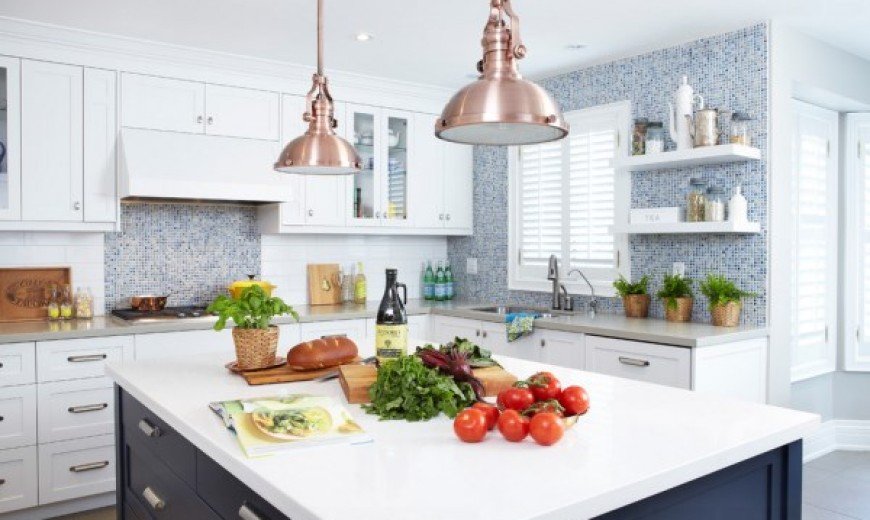
For home cooks planning a kitchen renovation, the biggest challenge often isn’t motivation; it’s that daily routines collide with a space that makes the healthy choice feel inconvenient. When counters are cramped, storage is chaotic, or cooking feels like a chore, even simple meals can turn into last-minute takeout or packaged options. Nutrition-focused kitchen design treats the room like a quiet partner in better decisions, shaping how easily real food fits into busy days. A healthy cooking environment can turn consistency into the default, supporting long-term wellness.
At the heart of a health-focused renovation is alignment. Kitchen layout principles, appliance selection criteria, food storage solutions, and health-minded material choices should support the way you actually cook. Many sustainable kitchen design ideas do this by making the best choice the easiest choice.
This matters because willpower is unreliable on busy days. When tools, ingredients, and cleanup flow naturally, home cooking happens more often and with less stress. Every day, safety improves too, since safe food preparation is easier to maintain when your setup is organized.
Picture a weeknight when you are hungry and tired. If a clear prep zone sits near the sink, a sharp knife is within reach, and containers are labeled at eye level, cooking feels almost pre-decided. Compare that to digging through clutter and giving up.
A healthy kitchen isn’t about willpower; it’s about reducing friction. When your layout, appliances, storage, and materials support your routine, healthy meal preparation becomes the “easy default,” even on busy nights.
Open up the prep zone you use most: Create a clear, well-lit path between the fridge, sink, and main counter so you can rinse, chop, and cook without detours. If you’re adjusting to an open kitchen layout, prioritize a continuous 36–48 inch stretch of counter near the sink for washing produce and staging ingredients. Keep a compost/bin pull-out and a small “prep tools” drawer (knife, board, peeler) in that same zone so you don’t bounce around the room.
Make the healthiest cooking method the quickest: If you roast vegetables, bake fish, or batch-cook grains, put those tools in the easiest-to-reach spots. Install a wall oven or place the primary oven next to your main counter so sheet-pan meals feel effortless, and add a vent hood that actually gets used because it’s quiet enough. In a small kitchen, a single “heat-and-serve” landing area beside the oven or microwave prevents juggling hot dishes and reduces takeout temptation.
Choose energy-efficient appliances that support real habits: Match appliances to how you actually cook, then look for efficient models within that category. Induction or efficient electric cooking can make weeknight sautéing faster and more comfortable, while a right-sized fridge helps food last without wasting energy cooling empty space. If you’re intrigued by connected features, the growth behind the USD 18.75 billion in 2023 smart kitchen appliances market size suggests you’ll have plenty of options for timers, temperature guidance, and reminders that reduce guesswork.
Build “smart” food storage into the cabinetry, not just the fridge: Plan zones that make healthy choices visible: shallow pantry shelves for canned beans, grains, and spices; a dedicated snack drawer for portioned nuts or fruit; and clear bins for meal components. Add full-extension drawers so you can see what you own, and consider a low, wide drawer for containers and lids to stop the daily search. For food preservation, leave space for a cooling rack, labeled freezer bins, and a small spot to jot “use-first” items.
Use non-toxic, easy-clean materials in the messiest places: Healthy cooking involves splatter, so choose surfaces that clean fast without harsh chemicals. For countertops and backsplashes, look for low-VOC options and adhesives, and ask for product documentation before you buy. Seal or finish wood properly, and avoid materials that stain easily around your main prep area so you’re not tempted to “save cleanup for later.”
Add a few “nudge” details that keep meals consistent: Upgrade lighting over your prep counter so chopping and reading labels feels easier, and add outlets where you’ll actually use them (counter corners, inside an appliance garage). If you meal prep, include one open shelf or cubby for your most-used small appliance so it doesn’t live in a hard-to-reach cabinet. These small layout decisions make it simpler to evaluate what you need for safe ventilation, power capacity, and storage space before construction starts.
Q: How can a kitchen layout be designed to encourage healthier cooking and eating habits?
A: Design around a simple “grab, rinse, prep, cook” flow so fresh ingredients feel effortless. Keep the sink, main counter, and cooktop close, and reserve your easiest-to-reach drawers for knives, boards, and everyday spices. Before you finalize cabinets, confirm exact appliance sizes so clearances do not steal your best prep space.
Q: What types of appliances support long-term nutrition and make healthy meal preparation easier?
A: Choose appliances that make whole-food cooking faster, like a responsive cooktop, a reliable oven for sheet-pan meals, and a quiet vent hood you will actually use. For energy consumption, compare the annual kWh and right-size your fridge to avoid paying to cool empty space.
Q: Which storage solutions help maintain food freshness and reduce waste effectively?
A: Use clear, airtight containers, labeled freezer bins, and full-extension pantry drawers so “use first” foods stay visible. Add a dedicated zone for produce and a separate spot for lunch prep to reduce forgotten leftovers.
Q: What materials in kitchen renovations contribute to a cleaner, more sustainable cooking environment?
A: Prioritize low-VOC finishes, sealants, and adhesives, and ask for documentation so you are not guessing about off-gassing. Pick non-porous, easy-clean surfaces near the stove and sink to reduce reliance on harsh cleaners.
Q: What if I want to renovate my kitchen with professional help that also guides me toward healthier lifestyle choices?
A: Look for a pro who will translate your health goals into a plan, like better lighting, ventilation, and storage zoning. Ask upfront about electrical safety updates, such as GFCI outlets for safety near water, and request a clear sourcing plan for dependable switches, outlets, and lighting components, including quality electrical supplies.
This checklist turns wellness goals into clear renovation decisions, so your new kitchen makes healthier cooking feel automatic. Use it before you order anything and again before you move back in.
✔ Map the prep path from fridge to sink to counter to heat.
✔ Reserve prime drawers for knives, boards, and daily seasonings.
✔ Specify the ventilation you will run every time you cook.
✔ Select right-size appliances that support whole-food meals and batch cooking.
✔ Add airtight storage with labels for pantry, fridge, and freezer.
✔ Choose low-odor finishes and easy-clean surfaces near splash zones.
✔ Upgrade lighting for bright, shadow-free chopping and reading labels.
Check these off, and your kitchen will support you daily.
It’s easy to want healthier meals but feel pulled off track by cluttered counters, hard-to-reach tools, or choices that depend on willpower at the end of a long day. The steadier path is an intentional kitchen design mindset: shape the space so healthy kitchen habits are the easiest habits, and let sustainable cooking practices fit naturally into real life. When the environment supports the goal, everyday decisions get simpler, and the long-term nutrition benefits show up as consistency, not perfection. Design the kitchen you want, and healthier cooking becomes the default. Choose one checklist item to tackle this week, clear one zone, streamline one storage area, or plan one upgrade. That’s wellness through environment: building a home base that supports resilience, energy, and health for years.