Articulaciones, Tendones y las Décadas “A Prueba de Todo”: Movilidad que Sí se Transfiere a la Vida Real

“Tu futuro no se construye con tu mejor entrenamiento. Se construye con lo que tus articulaciones pueden tolerar repetidamente.”

Mucha gente cree que entrenar para longevidad es solo:

  1. estar definido, o

  2. estar fuerte.

Pero existe un tercer pilar que decide si entrenas durante décadas… o si te quedas atrapado en el ciclo de:
dolor → descanso obligado → reinicio → dolor otra vez.

Ese pilar es la capacidad del tejido conectivo:

  • articulaciones

  • tendones

  • ligamentos

  • cartílago

  • y la habilidad de tener movilidad bajo carga con control

Porque el objetivo no es “ser flexible”.

El objetivo es ser durable.

La Verdad que Pocos Respetan: Los Tendones se Adaptan Más Lento que los Músculos

El músculo responde rápido.

El tendón es otro mundo: es como un cable de alta tensión.
Necesita tiempo, consistencia y el tipo correcto de carga.

Incluso periodos relativamente cortos de “no cargar” pueden empeorar propiedades mecánicas del tendón—una razón por la cual el entrenamiento intermitente (“on/off”) castiga tanto.

¿Sabías que…?

En estudios de “descarga” (unloading), se observan deterioros en propiedades del tendón en el orden de semanas, lo cual apoya la idea de que la consistencia moderada suele ser más amigable que los extremos.

Movilidad vs Flexibilidad vs Estabilidad

  • Flexibilidad: rango pasivo (hasta dónde llegas)

  • Movilidad: rango activo (hasta dónde llegas con control)

  • Estabilidad: poder sostener posición bajo carga, velocidad y fatiga

La movilidad de longevidad NO es estirar por estirar.
Es control bajo carga, porque la vida real está cargada.

El Cartílago No es “Vidrio”… Pero Odia el Abandono y las Cargas Mal Distribuidas

La evidencia sugiere que el cartílago cambia con el entorno de carga, y con carga reducida puede haber cambios como atrofia/adelgazamiento en ciertos contextos.

Esto no significa “no corras” o “no levantes.”
Significa:

las articulaciones no solo necesitan movimiento—necesitan carga inteligente.

Y para personas con osteoartritis o dolor articular, guías clínicas modernas consistentemente colocan el ejercicio como parte central del manejo no quirúrgico.

¿Sabías que…?

En comparaciones entre guías (ACR/AF, OARSI, VA/DoD), el ejercicio aparece repetidamente como tratamiento “núcleo” junto a educación y autocontrol.

La Realidad del Coaching: “Sin Dolor” y “Progreso” Sí Pueden Convivir

Dos extremos comunes:

  • “Si duele, paro todo.”

  • “Si duele, empujo más.”

La longevidad vive en el centro:

  • bajar irritación sin perder identidad

  • construir capacidad

  • progresar con inteligencia

  • mantener el hábito vivo

Herramienta #1: Isométricos — La Rampa de Entrada para Tendones y Articulaciones Irritadas

Los isométricos son contracciones sin movimiento articular (por ejemplo, sostener una sentadilla isométrica o split squat).

En tendinopatía rotuliana, investigaciones muestran que un protocolo isométrico puede reducir dolor de forma aguda y mejorar salida de fuerza.
Otros trabajos compararon efectos analgésicos isométricos vs isotónicos.
Y en osteoartritis de rodilla, revisiones recientes evalúan isométricos como opción para dolor y función.

¿Sabías que…?

Los isométricos funcionan como “puente”: permiten cargar tejido sin provocar tanta irritación por movimiento, ayudando a mantener consistencia mientras baja el dolor.

Aplicación práctica (simple):

  • 3–5 series de 30–45 segundos

  • esfuerzo medio-alto

  • 1–2 min descanso

  • 3–5 días/semana durante flare-ups
    Ejemplos:

  • wall sit / sentadilla isométrica

  • holds de pantorrilla

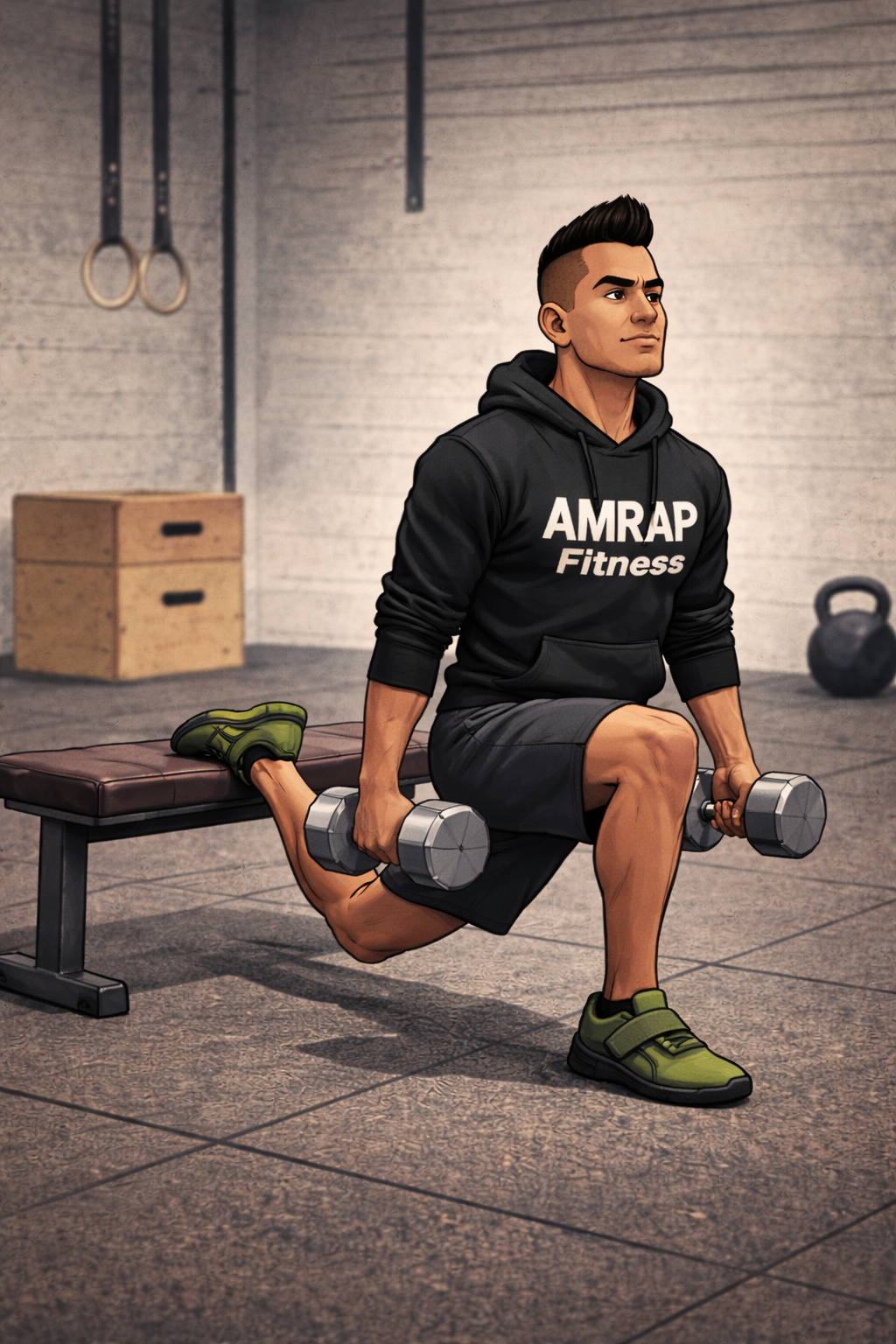
  • split squat holds

  • planchas laterales (cadera/tronco)

Herramienta #2: Fuerza Lenta Pesada y Tempo — Remodelación, No Apuestas

En una prueba aleatorizada para tendinopatía de Aquiles, tanto el método excéntrico como la fuerza lenta pesada (HSR) mostraron resultados clínicos positivos y duraderos.
Además, algunos modelos de adaptación tendinosa proponen contracciones pesadas, controladas y lo suficientemente largas para estimular cambios.

¿Sabías que…?

Un paradigma basado en evidencia para adaptación de tendón destaca contracciones pesadas y controladas (no miles de repeticiones) para producir estímulo útil.

Herramienta #3: Movilidad con Carga — La Movilidad que Sí “Se Usa”

Si haces fitness funcional, lo sabes:
puedes estirar y aun así sentirte rígido bajo una barra.

La movilidad con carga construye:

  • rango usable

  • fuerza en rangos finales

  • confianza en posiciones “incómodas”

Ejemplos que transfieren:

  • goblet squat pry con brace

  • holds de front rack + respiración torácica

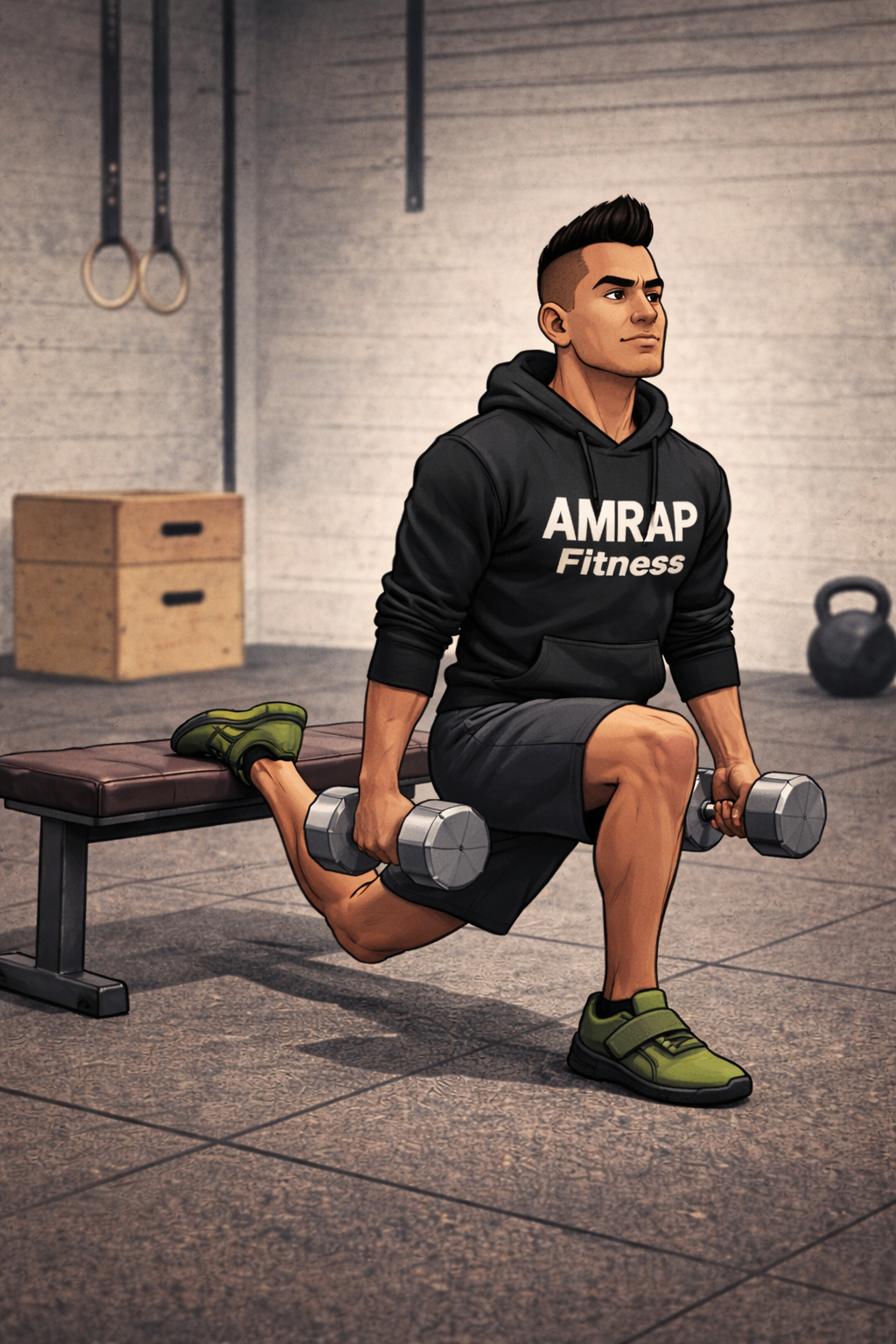
  • split squats con zancada larga

  • Cossack controlado

  • RDL con tempo

Plantilla Semanal “Durable” (Para Adultos Ocupados)

Día 1 — Fuerza (pierna) + capacidad tendinosa

  • patrón de sentadilla: 3–5 series (1–3 reps en reserva)

  • split squat con tempo: 3×6–8/ lado

  • pantorrilla isométrica: 3×30–45 s

  • core breve

Día 2 — Zona 2 + movilidad con control (10 min)

  • Zona 2: 25–45 min

  • circuito 2 rondas: goblet pry + front rack hold + bisagra a una pierna (asistida)

Día 3 — Tren superior + cuidado hombro/codo

  • remo + press

  • control escapular

  • isométricos si hay irritación

  • carries

Día 4 — Acondicionamiento con “bajo drama articular”

  • trineo / bici / med ball (si tolera)

  • nítido, no castigo

¿Sabías que…?

MedlinePlus (NIH) en español enfatiza ejercicio para fuerza, flexibilidad y equilibrio como parte del manejo de osteoartritis—no solo reposo.

25% Insight de Coaching (Sin hacerlo autobiografía)

Para atletas de toda la vida, esta es una transición dura:

puedes seguir teniendo un gran motor… mientras el chasis necesita más inteligencia.

Eso no es debilidad.
Eso es experiencia.

Entrenar por décadas es dominar:

  • estímulo correcto

  • pivote a tiempo

  • no permitir que un flare-up se convierta en pausa total

Cierre: La Durabilidad Es una Habilidad

No existe “articulaciones de acero” por magia.

Existe un sistema:

  • carga constante e inteligente

  • isométricos y tempo cuando sea necesario

  • movilidad con carga

  • programación que respeta recuperación

La fuerza te da potencia.
El cardio te da motor.

La durabilidad te deja usar ambos para siempre.

Recursos Científicos — Versión en Español (mismo rigor)

  • MedlinePlus en español (NIH): Tendinitis (información general y tratamiento)

  • NIH Salud: “Proteja sus tendones” (prevención + no exagerar)

  • MedlinePlus en español: Osteoartritis (ejercicio para fuerza/flexibilidad/equilibrio)

  • de Boer et al.: cambios musculares y tendinosos con descarga (unloading)

  • Rio et al. 2015 (BJSM): isométricos y analgesia en tendinopatía rotuliana

  • Beyer et al. 2015: HSR vs excéntricos (Aquiles)

  • OARSI 2019: guías para OA (ejercicio como base)

  • Eckstein et al.: cartílago y carga/atrofia con carga reducida

  • Meta-análisis reciente: isométricos en OA de rodilla
Ray Traitz
Joints, Tendons, and the “Bulletproof” Decades: Mobility That Actually Transfers to Real Life

“Your future isn’t built by your best workout. It’s built by what your joints can tolerate repeatedly.”

Most people think longevity training is about one of two things:

  1. being lean, or

  2. being strong.

Both matter.

But there’s a quieter third pillar that determines whether you keep training for decades—or end up in the cycle of flare-ups → time off → restart → flare-ups:

connective tissue capacity.

This entry is about the system that makes your strength and conditioning usable:

  • joints

  • tendons

  • ligaments

  • cartilage

  • and the underrated skill of loaded mobility with control

Because “flexible” isn’t the goal.

Durable is.

The Misunderstood Truth: Tendons Adapt Slower Than Muscles

Muscles are high-blood-flow tissue. They respond fast to training.

Tendons are different. They’re built more like high-tension cable than sponge. They need time, consistent loading, and the right type of strain.

Even short periods of unloading can negatively affect tendon mechanical properties—one reason why “I took a few weeks off and now everything hurts” is so common.

Did You Know?

Research on unloading shows tendon mechanical properties can deteriorate in as little as weeks, highlighting why “on/off” training often feels rougher on joints than steady, moderate consistency.

Bottom line: if you want “bulletproof decades,” stop training like tendons are muscle.

Mobility vs Flexibility vs Stability

A lot of people say “I need mobility,” but they mean “I feel tight.”

Here’s a cleaner framework:

  • Flexibility: passive range (how far you can get)

  • Mobility: active range (how far you can get with control)

  • Stability: your ability to own position under load, speed, fatigue

Longevity mobility is not passive stretching.
Longevity mobility is control under load, because real life is loaded.

Cartilage Isn’t “Glass”—But It Hates Neglect and Abnormal Load

Cartilage responds to loading patterns, and reduced loading can contribute to cartilage changes (including thinning/atrophy in some contexts).

That doesn’t mean “never run” or “never lift.”
It means:

your joints don’t just need activity—your joints need smart loading.

And for people already dealing with osteoarthritis or joint pain, modern clinical guidelines consistently place exercise as a core, non-surgical management strategy.

Did You Know?

In multiple osteoarthritis guidelines, “core treatments” repeatedly include patient education + exercise + self-management, not rest forever.

The Coaching Reality: “Pain-Free” and “Progress” Can Coexist

A huge percentage of adults believe one of two extremes:

  • “If it hurts, stop everything.”

  • “If it hurts, push harder.”

Longevity coaching lives in the middle:

  • reduce threat

  • build capacity

  • progress intelligently

  • keep the habit alive

This is where specific tools become powerful.

Tool #1: Isometrics — The “On-Ramp” for Angry Tendons and Joints

Isometrics are contractions without joint movement (like holding a split squat, wall sit, or calf raise hold).

In patellar tendinopathy research, an isometric protocol reduced pain and improved force output acutely (often for ~45 minutes post).
Follow-up work compared isometrics vs isotonic protocols and continued exploring analgesic effects in-season.

And in knee osteoarthritis, recent evidence continues evaluating isometrics as a meaningful option for pain and function.

Did You Know?

Isometrics can function like a “bridge”: they let you load tissue without provoking high movement irritation, which helps maintain training identity while symptoms calm.

Coaching application (simple):

  • 3–5 sets of 30–45 seconds

  • moderate-to-hard effort

  • 1–2 minutes rest

  • 3–5 days/week during flare-ups
    Examples:

  • Spanish squat hold / wall sit

  • calf raise holds

  • split squat holds

  • side plank variations (for trunk/hip support)

Tool #2: Heavy Slow Resistance and Tempo — “Tendon Remodeling, Not Tendon Gambling”

For tendon health, heavy slow resistance (HSR) and eccentrics are both widely used and studied. In a randomized trial for Achilles tendinopathy, both eccentric training and HSR produced positive, lasting results (with some differences in satisfaction/compliance).

Separate reviews propose tendon-adaptation paradigms emphasizing high-magnitude tendon strain, held long enough to matter.

Did You Know?

A proposed evidence-based tendon adaptation model highlights heavy, controlled contractions (not endless reps) as a meaningful stimulus for tendon change.

Coaching application (tendon-focused strength days):

  • slow eccentrics (3–5 sec down)

  • controlled concentric (not sloppy)

  • 3–5 work sets

  • progressive load, modest weekly increases

  • no “random max-outs” when tendons are irritated

Tool #3: Loaded Mobility — The Missing Piece for Functional Fitness Athletes

If you do functional fitness, you already know this:
you can stretch all day and still feel stiff under a barbell.

Loaded mobility builds:

  • range you can use

  • strength in end ranges

  • confidence in “awkward positions”

Examples that transfer:

  • goblet squat pry with bracing

  • front rack holds + thoracic extension breathing

  • split squats with a long stride (hip flexor length + glute control)

  • controlled Cossack squats (range + adductor strength)

  • tempo Romanian deadlifts (hamstrings + hinge pattern)

This isn’t a “mobility routine.”

This is movement skill under load.

Tool #4: Your Warm-Up Should Be a Diagnostic, Not a Ritual

A longevity warm-up does three jobs:

  1. turn on the right muscles

  2. restore positions you need today

  3. tell you whether to push or pivot

If your warm-up feels worse as it goes, that’s information.
If it improves, that’s green-light data.

The “Bulletproof” Weekly Template (Busy Adult Version)

This template is designed so you can train hard sometimes without living injured.

Day 1 — Strength (Lower) + Tendon Capacity

  • Squat pattern (front squat or safety bar): 3–5 sets (leave 1–3 reps in reserve)

  • Tempo split squat: 3×6–8/side (3 sec down)

  • Calf isometric holds: 3×30–45 sec

  • Short trunk work

Day 2 — Zone 2 + Mobility Under Control (10 minutes)

  • Zone 2: 25–45 minutes

  • Loaded mobility circuit (2 rounds):

    • goblet squat pry (5 breaths)

    • thoracic opener + front rack hold (30 sec)

    • hip airplane or supported single-leg hinge (5/side)

Day 3 — Upper + Shoulder/Elbow Tendon Care

  • Row + press work

  • Scapular control (face pulls, Y-raises)

  • Optional isometric “prep” if elbows/shoulders get cranky

  • Finish with carries

Day 4 — Athletic Conditioning (Low joint drama)

  • sled pushes

  • bike intervals

  • med ball throws (if shoulders tolerate)

  • keep it crisp, not punishing

Did You Know?

Major public health and guideline frameworks repeatedly emphasize that the right exercise improves pain/function in joint conditions like OA—often more reliably than passive approaches alone.

25% Relatable Coaching Insight (Without Making This a Life Story)

One of the hardest shifts for lifelong athletes is accepting this:

your engine can still be strong while your chassis needs smarter care.

That isn’t weakness. That’s maturity.

Training for decades means learning the art of:

  • selecting the right stimulus

  • knowing when to pivot

  • never letting a flare-up become a full stop

That’s not “doing less.”

That’s training like someone who plans to still be capable at 60, 70, and beyond.

Closing: Durability Is a Skill

“Bulletproof joints” isn’t a genetic gift.

It’s a system:

  • consistent, smart loading

  • tissue-specific work (isometrics, tempo, HSR)

  • mobility you can actually use

  • programming that respects recovery

Strength is amazing. Conditioning is powerful.

But durability is what lets you keep both.

Resources (Entry #5)

  • de Boer et al. unloading study: time course of muscle and tendon changes with unloading; tendon properties deteriorate within weeks.

  • Rio et al. 2015: isometric exercise reduces pain and inhibition in patellar tendinopathy.

  • Beyer et al. 2015: heavy slow resistance vs eccentric training for Achilles tendinopathy (RCT).

  • Functional adaptation of connective tissue training paradigm (tendon strain model).

  • OARSI 2019 guidelines for non-surgical OA management: exercise as core treatment.

  • Eckstein et al. review on cartilage and loading/atrophy under reduced loading.

  • KOA isometric exercise systematic review/meta-analysis (recent evidence).

Ray Traitz
3/7 Saturday

Partner warm-up

Assisted bar muscle-ups

Assisted bar pull overs

Assisted handstands

Skill

DB snatch

WOD

4 rounds of:

10 DB snatch 

80-yard sprint 

Ray Traitz
3/6 Friday

Partner warm-up

Band drills

  • Backpeddle

  • Side shuffle

  • Sprints 

Skill

Sled sprints

WOD

10x 40yard sprints

1 minute rest

Ray Traitz
Simple Daily Habits to Boost Your Whole-Body Health Easily

By: Sheila Olson (guest author)

Busy parents juggling work, meals, and everyone else’s needs often want daily well-being enhancement, but the usual advice demands time and willpower they don’t have. The real tension is that energy, mood, and focus can slip when mornings feel rushed, nights feel short, and stress runs the day. A handful of whole-body health strategies can change that pattern by building steadier rhythms that support skin, muscles, digestion, and the nervous system. With flexible morning routines, restorative sleep benefits, and practical stress management techniques, small choices start stacking into noticeable day-to-day improvements.

Use a 10-Minute Morning Tune-Up: Stretch, Sip, Shield

When mornings are busy, small “whole-body” moves add up fast. Try this 10-minute tune-up to cover mobility, skin, hydration, and oral care before the day starts making decisions for you.

  1. 2-Minute Wake-Up Stretch (Neck–Spine–Hips): Do a simple sequence: 3 slow neck circles each way, 5 shoulder rolls, 5 cat-cow breaths, then a 30-second hip-flexor stretch per side. Keep it gentle, your goal is to signal “we’re awake,” not to max flexibility. Pair it with a steady inhale/exhale to reinforce the stress-lowering habit you’re building from those small daily upgrades.

  2. 1-Minute “Reset” for Ankles, Calves, and Feet: While brushing or waiting for the shower to warm, do 10 calf raises, then 10 ankle circles per side, then 10 toe lifts. This wakes up circulation and helps your lower body feel steadier if you’ll be standing, commuting, or working out later. If you sit a lot, this quick lower-leg reset can reduce that stiff, heavy feeling that shows up by mid-morning.

  3. 90-Second Cleanse + Moisturize (Keep It Simple): Wash your face with lukewarm water and a gentle cleanser, then apply a basic moisturizer while skin is slightly damp. This supports your skin barrier so you’re less likely to feel dry or irritated later, especially in winter or after hot showers. If you’re acne-prone, choose “non-comedogenic” and keep the routine consistent for a few weeks before judging it.

  4. Sunscreen “Shield” You’ll Actually Use: Apply sunscreen to face, ears, neck, and any exposed chest/arms before you head out, even on “quick errand” days. People often under-apply; research on typical sunscreen use reports low facial application thickness, so give yourself a simple rule: two finger-length lines for face/neck, plus more for exposed areas. Keep it near your toothbrush or coffee supplies so it becomes automatic.

  5. Hydrate Early With a Minimum Dose: Drink a full glass of water soon after waking, then aim for another by late morning. Early hydration can improve energy and reduce the “I thought I was hungry” snack spiral, which supports the small-habit approach from your daily well-being upgrades. If plain water feels boring, add ice or a squeeze of citrus, anything that helps you repeat it.

  6. 2-Minute Oral Hygiene (Brush + Quick Extras): Brush for two minutes, then add one “bonus” step: floss one tight area, use a tongue scraper, or swish water after coffee. This keeps the routine realistic while still improving daily maintenance. If you struggle to floss, commit to just two teeth at first, momentum beats perfection.

Habits That Make Whole-Body Health Stick

Daily upgrades work best when they become default settings, not special projects. These habits give you simple cues and repeatable rhythms so you can build whole-body health confidently, even when life gets busy.

Lights-Out Wind-Down

  • What it is: Set a 15-minute screen-free routine: dim lights, wash up, and prep tomorrow.

  • How often: Nightly

  • Why it helps: A consistent cue trains your body to shift into sleep mode faster.

Five-Breath Reset

  • What it is: Do slow nasal breathing for five breaths, counting longer exhales.

  • How often: 2 to 4 times daily

  • Why it helps: It lowers stress reactivity and helps cravings and irritability pass.

Mindful Minute Check-In

  • What it is: Practice being aware of the present moment without judging thoughts.

  • How often: Daily

  • Why it helps: It improves self-control when emotions push you off routine.

Connection on Purpose

  • What it is: Send one supportive text or make a 5-minute call.

  • How often: Daily or 3 times weekly

  • Why it helps: Social connection strengthens mental health and reduces perceived stress.

“Walk the Day Closed” Loop

  • What it is: Take a brisk 10 to 20 minute walk after dinner.

  • How often: 3 to 5 times weekly

  • Why it helps: Walking can support reducing stress hormones by 15%.

Common Questions on Stress-Smart Daily Habits

Q: What are some quick stretching exercises I can do every morning to reduce stiffness and improve flexibility?
A: Try a 3-minute flow: neck circles, shoulder rolls, cat-cow, and a gentle forward fold with bent knees. Add 30 seconds per side of a hip flexor stretch and a calf stretch against a wall. Move slowly and breathe out as you ease into each position to reduce tension.

Q: How can I create a calming bedtime routine that helps me get better, more restful sleep?
A: Pick one consistent cue, like dimming lights and doing 5 minutes of light stretching or reading. Keep the routine short so it feels doable even on stressful days, and aim for the same sleep and wake times most days. If your mind races, jot tomorrow’s top three tasks on paper, then stop planning.

Q: What are effective mindfulness or breathing techniques for managing daily stress and anxiety?
A: Use “box breathing”: inhale 4 seconds, hold 4, exhale 4, hold 4, repeat 4 rounds. Or try a longer exhale (inhale 4, exhale 6) to signal safety to your nervous system. Pair it with a simple label like “worrying” or “planning” to loosen the grip of anxious thoughts.

Q: How can maintaining strong social connections improve my overall mental and emotional health?
A: Regular connection lowers perceived stress and makes challenges feel more manageable. Keep it simple: a weekly check-in call, a walk with a friend, or a supportive text thread. When you feel overwhelmed, ask for one specific thing, like “Can you listen for five minutes?” makes reaching out easier.

Q: What steps should I take if I want to explore new business degree programs to change my career path and reduce uncertainty about my future?
A: Start by identifying your biggest obstacle: time, stress load, or sleep, because it affects follow-through. Then set a 20-minute weekly research block to compare program formats, prerequisites, cost, and outcomes, and write down two questions to ask admissions; for context on what options can lead to different business career paths, you can compare various online business degrees as you build your shortlist. To reduce uncertainty, schedule one informational chat with a current student or advisor and decide on one next step you can complete this week.

Quick Health Habit Takeaways

  • Start your morning with light movement, balanced fuel, and sunlight to set steady energy.

  • Keep hydration and oral care simple with regular water and consistent brushing and flossing.

  • Build stress relief into your day using short breathing, stretching, or mindful breaks.

  • Support skin and mental well-being with gentle daily care, quality sleep, and intentional downtime.

Lock In One Daily Habit for Stronger Whole-Body Health

When life gets busy, it’s easy for good intentions to fade and for commitment to daily health habits to feel like one more demand. A simpler path is to focus on small, positive lifestyle changes, using supportive health guidance and a steady mindset rather than trying to overhaul everything at once. Kept simple and repeated, these routines become more automatic, and the long-term health benefits show up in energy, mood, and resilience, even after setbacks. One small habit, done daily, beats a perfect plan you can’t keep. Pick one habit today and commit to it for the next seven days, adjusting without quitting if a day goes sideways. That consistency is what builds stability and helps health support the rest of life.

Ray Traitz