
Joints, Tendons, and the “Bulletproof” Decades: Mobility That Actually Transfers to Real Life
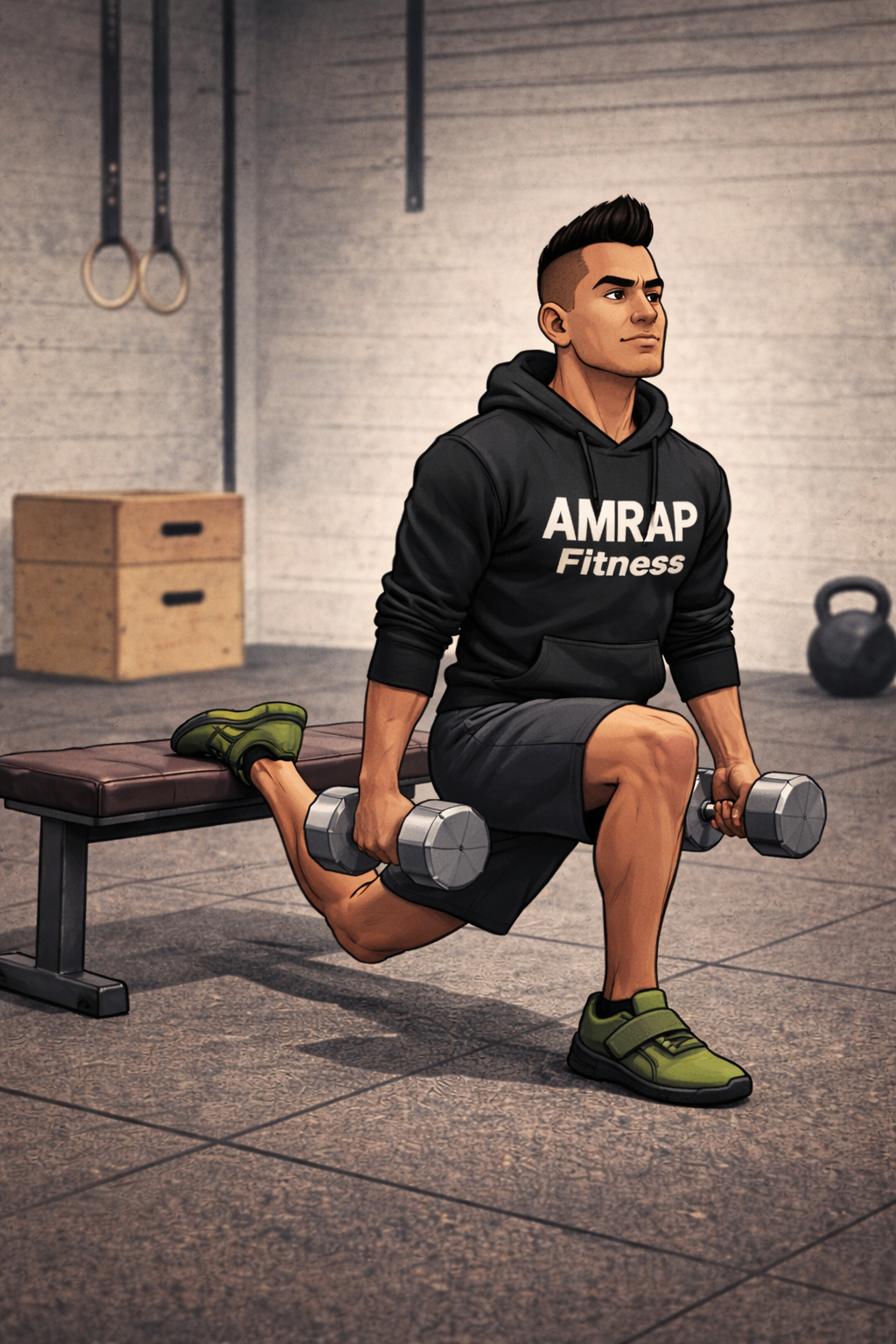
“Your future isn’t built by your best workout. It’s built by what your joints can tolerate repeatedly.”
Most people think longevity training is about one of two things:
being lean, or
being strong.
Both matter.
But there’s a quieter third pillar that determines whether you keep training for decades—or end up in the cycle of flare-ups → time off → restart → flare-ups:
connective tissue capacity.
This entry is about the system that makes your strength and conditioning usable:
joints
tendons
ligaments
cartilage
and the underrated skill of loaded mobility with control
Because “flexible” isn’t the goal.
Durable is.
The Misunderstood Truth: Tendons Adapt Slower Than Muscles
Muscles are high-blood-flow tissue. They respond fast to training.
Tendons are different. They’re built more like high-tension cable than sponge. They need time, consistent loading, and the right type of strain.
Even short periods of unloading can negatively affect tendon mechanical properties—one reason why “I took a few weeks off and now everything hurts” is so common.
Did You Know?
Research on unloading shows tendon mechanical properties can deteriorate in as little as weeks, highlighting why “on/off” training often feels rougher on joints than steady, moderate consistency.
Bottom line: if you want “bulletproof decades,” stop training like tendons are muscle.
Mobility vs Flexibility vs Stability
A lot of people say “I need mobility,” but they mean “I feel tight.”
Here’s a cleaner framework:
Flexibility: passive range (how far you can get)
Mobility: active range (how far you can get with control)
Stability: your ability to own position under load, speed, fatigue
Longevity mobility is not passive stretching.
Longevity mobility is control under load, because real life is loaded.
Cartilage Isn’t “Glass”—But It Hates Neglect and Abnormal Load
Cartilage responds to loading patterns, and reduced loading can contribute to cartilage changes (including thinning/atrophy in some contexts).
That doesn’t mean “never run” or “never lift.”
It means:
your joints don’t just need activity—your joints need smart loading.
And for people already dealing with osteoarthritis or joint pain, modern clinical guidelines consistently place exercise as a core, non-surgical management strategy.
Did You Know?
In multiple osteoarthritis guidelines, “core treatments” repeatedly include patient education + exercise + self-management, not rest forever.
The Coaching Reality: “Pain-Free” and “Progress” Can Coexist
A huge percentage of adults believe one of two extremes:
“If it hurts, stop everything.”
“If it hurts, push harder.”
Longevity coaching lives in the middle:
reduce threat
build capacity
progress intelligently
keep the habit alive
This is where specific tools become powerful.
Tool #1: Isometrics — The “On-Ramp” for Angry Tendons and Joints
Isometrics are contractions without joint movement (like holding a split squat, wall sit, or calf raise hold).
In patellar tendinopathy research, an isometric protocol reduced pain and improved force output acutely (often for ~45 minutes post).
Follow-up work compared isometrics vs isotonic protocols and continued exploring analgesic effects in-season.
And in knee osteoarthritis, recent evidence continues evaluating isometrics as a meaningful option for pain and function.
Did You Know?
Isometrics can function like a “bridge”: they let you load tissue without provoking high movement irritation, which helps maintain training identity while symptoms calm.
Coaching application (simple):
3–5 sets of 30–45 seconds
moderate-to-hard effort
1–2 minutes rest
3–5 days/week during flare-ups
Examples:Spanish squat hold / wall sit
calf raise holds
split squat holds
side plank variations (for trunk/hip support)
Tool #2: Heavy Slow Resistance and Tempo — “Tendon Remodeling, Not Tendon Gambling”
For tendon health, heavy slow resistance (HSR) and eccentrics are both widely used and studied. In a randomized trial for Achilles tendinopathy, both eccentric training and HSR produced positive, lasting results (with some differences in satisfaction/compliance).
Separate reviews propose tendon-adaptation paradigms emphasizing high-magnitude tendon strain, held long enough to matter.
Did You Know?
A proposed evidence-based tendon adaptation model highlights heavy, controlled contractions (not endless reps) as a meaningful stimulus for tendon change.
Coaching application (tendon-focused strength days):
slow eccentrics (3–5 sec down)
controlled concentric (not sloppy)
3–5 work sets
progressive load, modest weekly increases
no “random max-outs” when tendons are irritated
Tool #3: Loaded Mobility — The Missing Piece for Functional Fitness Athletes
If you do functional fitness, you already know this:
you can stretch all day and still feel stiff under a barbell.
Loaded mobility builds:
range you can use
strength in end ranges
confidence in “awkward positions”
Examples that transfer:
goblet squat pry with bracing
front rack holds + thoracic extension breathing
split squats with a long stride (hip flexor length + glute control)
controlled Cossack squats (range + adductor strength)
tempo Romanian deadlifts (hamstrings + hinge pattern)
This isn’t a “mobility routine.”
This is movement skill under load.
Tool #4: Your Warm-Up Should Be a Diagnostic, Not a Ritual
A longevity warm-up does three jobs:
turn on the right muscles
restore positions you need today
tell you whether to push or pivot
If your warm-up feels worse as it goes, that’s information.
If it improves, that’s green-light data.
The “Bulletproof” Weekly Template (Busy Adult Version)
This template is designed so you can train hard sometimes without living injured.
Day 1 — Strength (Lower) + Tendon Capacity
Squat pattern (front squat or safety bar): 3–5 sets (leave 1–3 reps in reserve)
Tempo split squat: 3×6–8/side (3 sec down)
Calf isometric holds: 3×30–45 sec
Short trunk work
Day 2 — Zone 2 + Mobility Under Control (10 minutes)
Zone 2: 25–45 minutes
Loaded mobility circuit (2 rounds):
goblet squat pry (5 breaths)
thoracic opener + front rack hold (30 sec)
hip airplane or supported single-leg hinge (5/side)
Day 3 — Upper + Shoulder/Elbow Tendon Care
Row + press work
Scapular control (face pulls, Y-raises)
Optional isometric “prep” if elbows/shoulders get cranky
Finish with carries
Day 4 — Athletic Conditioning (Low joint drama)
sled pushes
bike intervals
med ball throws (if shoulders tolerate)
keep it crisp, not punishing
Did You Know?
Major public health and guideline frameworks repeatedly emphasize that the right exercise improves pain/function in joint conditions like OA—often more reliably than passive approaches alone.
25% Relatable Coaching Insight (Without Making This a Life Story)
One of the hardest shifts for lifelong athletes is accepting this:
your engine can still be strong while your chassis needs smarter care.
That isn’t weakness. That’s maturity.
Training for decades means learning the art of:
selecting the right stimulus
knowing when to pivot
never letting a flare-up become a full stop
That’s not “doing less.”
That’s training like someone who plans to still be capable at 60, 70, and beyond.
Closing: Durability Is a Skill
“Bulletproof joints” isn’t a genetic gift.
It’s a system:
consistent, smart loading
tissue-specific work (isometrics, tempo, HSR)
mobility you can actually use
programming that respects recovery
Strength is amazing. Conditioning is powerful.
But durability is what lets you keep both.
Resources (Entry #5)
de Boer et al. unloading study: time course of muscle and tendon changes with unloading; tendon properties deteriorate within weeks.
Rio et al. 2015: isometric exercise reduces pain and inhibition in patellar tendinopathy.
Beyer et al. 2015: heavy slow resistance vs eccentric training for Achilles tendinopathy (RCT).
Functional adaptation of connective tissue training paradigm (tendon strain model).
OARSI 2019 guidelines for non-surgical OA management: exercise as core treatment.
Eckstein et al. review on cartilage and loading/atrophy under reduced loading.
KOA isometric exercise systematic review/meta-analysis (recent evidence).