
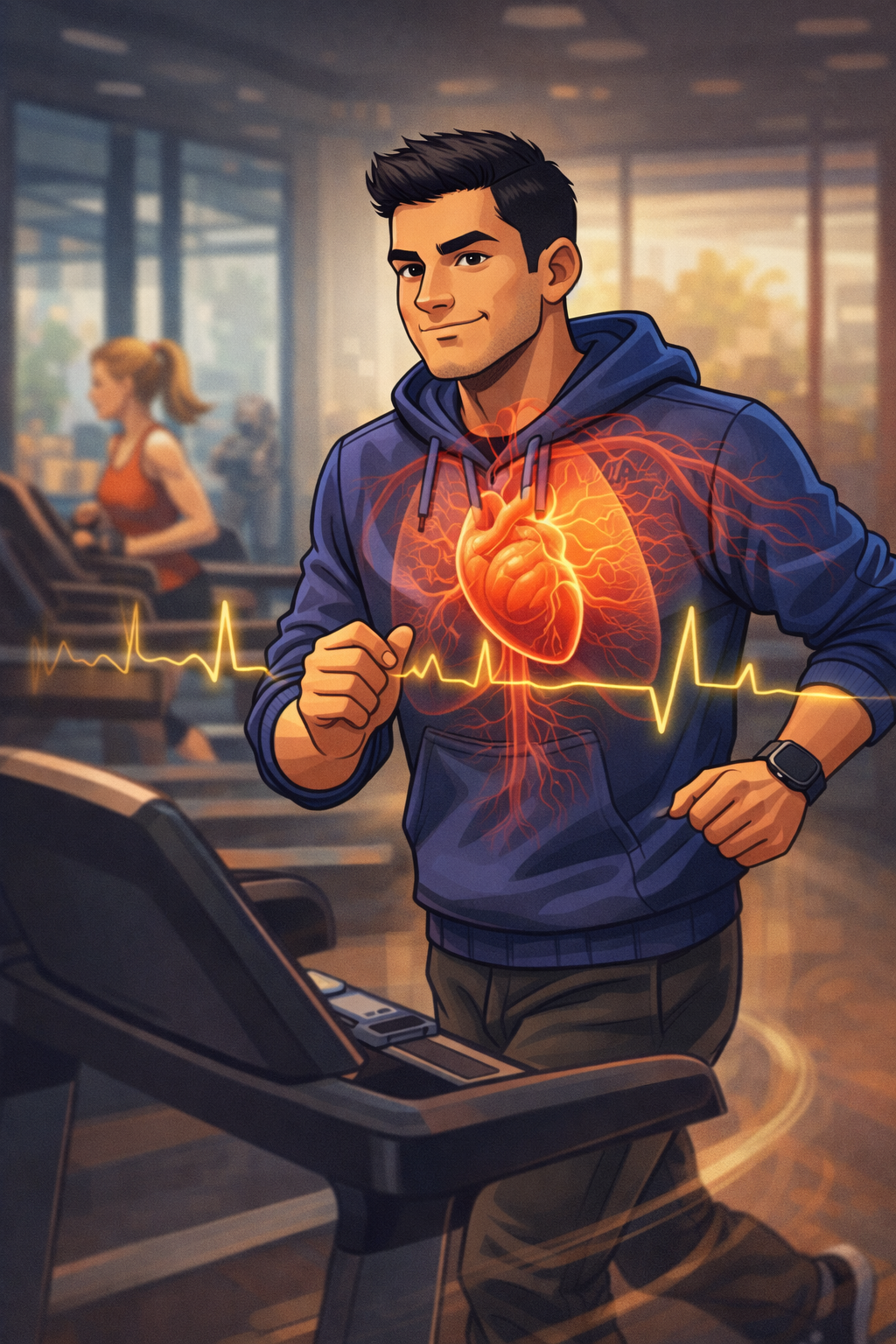
Resiliencia Cardiovascular: El “Presupuesto de Aire” que Determina Cómo Envejeces

La longevidad no es solo vivir más años.

Es si todavía puedes cargar tu vida… sin sentir que la vida te está cargando a ti.

Apertura: El Día que No Esperabas

Nadie programa el día en que descubre que su “presupuesto de aire” está bajo.

Sucede en momentos normales:

  • Subes una escalera con bolsas… y tu respiración se dispara.

  • Caminas rápido por el estacionamiento… y sientes que acabas de correr.

  • Estás estresado, con poco sueño… y tu cuerpo se siente “acelerado.”

  • Intentas volver a entrenar tras semanas duras… y todo se siente más pesado.

Y no es porque seas débil.
No es porque “te dejaste.”

Es porque tu resiliencia cardiovascular—la capacidad de producir energía, manejar fatiga y mantener calma bajo demanda física y emocional—tiene un límite.

Ese límite es tu presupuesto de aire.

Y la gente que envejece bien no solo entrena fuerza y movilidad.

Construye un presupuesto de aire más grande.

Qué es Realmente la Resiliencia Cardiovascular

La resiliencia cardiovascular no es “hacer cardio.”

Es la capacidad integrada de tu:

  • corazón (potencia de bombeo)

  • pulmones (intercambio de oxígeno)

  • vasos sanguíneos (sistema de entrega)

  • músculos (usar oxígeno eficientemente)

  • sistema nervioso (regular el estrés)

Es tu habilidad de hacer más con menos estrés.

Subir escaleras sin “respirar en pánico.”
Recuperarte más rápido entre series.
Caminar y hablar sin sentirte vacío.
Dormir mejor porque tu cuerpo no está “en modo alerta” todo el tiempo.

Por eso la capacidad cardiorrespiratoria aparece una y otra vez como uno de los predictores más consistentes de salud a largo plazo.

Pero ojo:

No se trata de volverte corredor.

Se trata de volverte difícil de agotar.

La Pregunta de Longevidad que Nadie Hace

El marketing fitness suele preguntar:

“¿Qué tan marcado puedes estar?”
“¿Qué tan duro puedes entrenar?”
“¿Cuánto puedes sufrir?”

La longevidad pregunta otra cosa:

¿Qué tan rápido te recuperas y qué tan calmado puedes mantenerte bajo carga?

Porque la vida es carga.

Trabajo es carga.
Mal sueño es carga.
Cuidar a otros es carga.
Presión financiera es carga.
Ser padre/madre es carga.

La resiliencia cardiovascular evita que esa carga te empuje a:

  • fatiga constante

  • respiración tipo ansiedad

  • bajones de energía

  • inconsistencia en el entrenamiento

  • comer por estrés

  • semanas de “no puedo volver a mi rutina”

Señales de Alerta: Presupuesto de Aire Bajo

No necesitas laboratorio para notar patrones.

Indicadores reales:

  1. Las escaleras se sienten como sprint
    No es moral. Es motor pequeño.

  2. Recuperación lenta
    Necesitas mucho descanso solo para sentirte normal.

  3. Estrés = rechazo al movimiento
    Porque el estrés ya consume tu presupuesto de aire.

  4. Sueño ligero y sistema nervioso “encendido”
    Cuesta bajar revoluciones por la noche.

  5. Tu “ritmo fácil” no es fácil
    Si no puedes mantener 20–30 minutos en ritmo conversacional, falta un pilar clave.

¿Sabías que…? El “Talk Test” es una Prueba de Élite por lo Simple

Una auto-prueba limpia: poder moverte a un ritmo donde puedes hablar en frases completas.

No es magia.

Es una señal de intensidad manejable.
Si luchas por aire, te pasaste del nivel donde construyes base.

Verdad de Coaching: No Necesitas Más Intensidad

La mayoría de personas que se sienten estancadas después de los 35 no necesitan más castigo.

Necesitan un motor más grande.

Porque cuando el motor crece:

  • la fuerza se siente mejor

  • recuperas más rápido

  • el apetito se estabiliza

  • el estrés se siente menos “catastrófico”

  • vuelves a la rutina con menos fricción

Eso es resiliencia.

Aplicación Táctica: Construye Presupuesto de Aire Sin Quemarte

Capa 1 — Zona 2 (Constructor de Base)

Trabajo aeróbico que puedes recuperar.

Prescripción:

  • 2–4 sesiones/semana

  • 25–45 minutos

  • ritmo conversacional (puedes hablar bien)

  • opciones: caminata inclinada, bici, remo, trote suave, empuje de trineo a baja exigencia

Regla: terminas sintiéndote mejor, no destruido.

Capa 2 — “Micro-Intervalos” (Amortiguador de la Vida Real)

Zona 2 construye base.
Pero la vida tiene picos.

Necesitas exposición corta, bien dosificada.

Opción (1x/semana):

  • 10 min suave

  • 6–10 rondas: 30 s rápido + 90 s suave

  • 5 min suave para cerrar

No es un WOD mortal.
Es práctica controlada para los picos de la vida.

Capa 3 — Caminatas de Recuperación (Bajar Revoluciones)

Subestimadísimo.

Después de comer (7–10 min) o al salir del trabajo:

  • caminar suave

  • respirar más lento

  • dejar que el cuerpo se estabilice

Esto mejora adherencia más que la “rutina perfecta.”

Marco Anti-Fatiga: Cómo Sabes que Funciona

Vas a sentirlo antes de verlo.

Señales:

  • dejas de temerle a las escaleras

  • recuperas más rápido entre series

  • tu respiración en reposo se siente más tranquila

  • tu ritmo fácil realmente es fácil

  • entrenas con consistencia sin pelear con tu cuerpo

Eso es anti-fatiga.

Fisiología. No hype.

Autoevaluación Simple

Responde con honestidad:

  1. Cuando tengo estrés, ¿moverme me ayuda o me aplasta?

  2. ¿Puedo mantener 30 minutos hablando en frases completas?

  3. ¿Cuánto tardo en sentirme normal tras esfuerzo: minutos u horas?

  4. ¿Me siento “encendido” por la noche aunque esté cansado?

  5. ¿Me recupero en días tras una interrupción o pierdo meses?

No es juicio.
Es mapa.

Cierre: Gana el Cuerpo Calmado

La resiliencia cardiovascular te da algo más profundo que “estar en forma.”

Te da capacidad.

Más presupuesto de aire significa:

  • más paciencia

  • más estabilidad

  • más consistencia

  • más confianza

  • menos fragilidad

No es solo entrenamiento.

Es preparación para la década que viene.
Ray Traitz
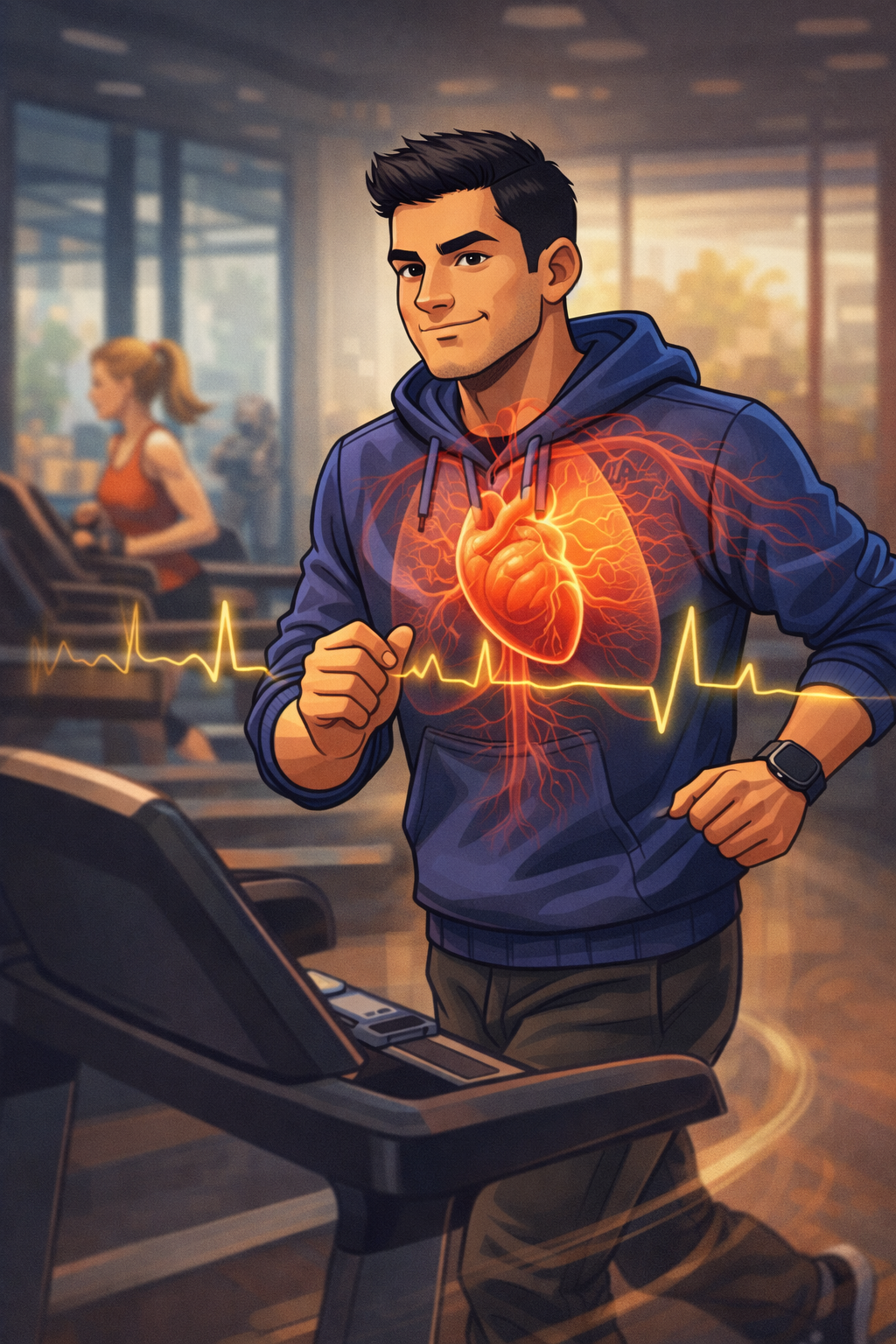
Cardiovascular Resilience: The “Breath Budget” That Determines How You Age

Longevity isn’t just about living longer.

It’s about whether you can still carry your life without feeling like life is carrying you.

Opening Device: The Day You Didn’t Expect

Nobody schedules the day they discover their “breath budget” is low.

It happens in normal moments:

  • You carry groceries up one flight of stairs… and your chest tightens more than it should.

  • You walk fast in a parking lot… and your breathing spikes like you just sprinted.

  • You’re late, stressed, sleep-deprived… and you feel like your body is “revving” too high.

  • You try to return to training after a rough few weeks… and everything feels harder than it used to.

And it’s not because you’re weak.
It’s not because you “fell off.”

It’s because your cardiovascular resilience—your ability to produce energy, clear fatigue, and stay calm under physical and emotional demand—has a limit.

That limit is your breath budget.

And the people who age well?
They don’t just build muscle and mobility.

They build a bigger breath budget.

What Cardiovascular Resilience Really Is

Cardiovascular resilience isn’t “cardio.”

It’s the integrated capacity of your:

  • heart (pumping power)

  • lungs (oxygen exchange)

  • blood vessels (delivery system)

  • muscles (using oxygen efficiently)

  • nervous system (regulating stress response)

It’s your ability to do more with less stress.

To climb stairs without panic-breathing.
To recover faster between sets.
To walk and talk at the same time without feeling “spent.”
To sleep better because your system isn’t running hot all the time.

This is why cardiorespiratory fitness (CRF) shows up again and again as a major predictor of health outcomes across the lifespan.

But here’s the key:

This isn’t about becoming a runner.

It’s about becoming hard to exhaust.

The Longevity Question Nobody Asks

Most fitness marketing asks:

“How shredded can you get?”
“How hard can you go?”
“How much can you suffer?”

Longevity asks something different:

How fast can you recover—and how calm can you stay—under load?

Because life is load.

Work stress is load.
Bad sleep is load.
Caretaking is load.
Financial pressure is load.
Parenting is load.

Cardiovascular resilience is the system that helps you carry that load without spiraling into:

  • constant fatigue

  • anxiety-like breathing

  • energy crashes

  • inconsistent training

  • overeating from stress

  • “I can’t get back on track” weeks

The “Red Flag” Signs Your Breath Budget Is Low

You don’t need a lab to start noticing patterns.

Here are real-world indicators:

  1. Stairs feel like a sprint
    You’re not gasping because you’re out of shape morally—you’re gasping because your engine is small.

  2. You recover slowly between efforts
    You need long rest just to feel normal again.

  3. You dread movement when stressed
    Because stress already consumes your breath budget.

  4. Your sleep is light and your nervous system feels “wired”
    Low aerobic capacity often pairs with poor downshift ability.

  5. Your “easy pace” isn’t easy
    If you can’t maintain a conversational pace for 20–30 minutes, you’re missing a major longevity lever.

Did You Know? The “Talk Test” Is Elite-Level Simple

One of the cleanest self-tests for aerobic base is the ability to maintain a pace where you can breathe through your nose or speak in full sentences.

Not because nose breathing is magic—
but because it’s a proxy for manageable intensity.

If you have to fight for air, you’ve left the “build the base” zone.

The Coaching Truth: You Don’t Need More Intensity

Most people who feel “stuck” after 35 don’t need more punishment.

They need a bigger engine.

Because when your engine is bigger:

  • strength training feels better

  • recovery improves

  • appetite stabilizes

  • stress feels less catastrophic

  • you return to baseline faster after disruption

It becomes harder for life to knock you off your routine.

That’s the point.

Tactical Application: Build Your Breath Budget (Without Burning Out)

Layer 1 — Zone 2 (The Base Builder)

This is the aerobic work you can recover from.

Prescription:

  • 2–4 sessions/week

  • 25–45 minutes

  • conversational pace (you can speak in full sentences)

  • choose: incline walk, bike, row, easy jog, sled pushes at low strain

Rule: you should finish feeling better, not wrecked.

Layer 2 — “Micro-Intervals” (The Real-Life Shock Absorber)

Zone 2 builds the base.
But life isn’t steady-state.

You need short exposures to higher breathing—done intelligently.

Micro-interval option (1x/week):

  • 10 minutes easy warm-up

  • 6–10 rounds: 30 seconds brisk + 90 seconds easy

  • 5 minutes cool down

This is not a death workout.
This is controlled practice for “life spikes.”

Layer 3 — Recovery Walks (The Nervous System Downshift)

This is the most underrated lever.

After meals (7–10 minutes) or after work:

  • easy walk

  • breathe slower

  • let your system settle

This improves adherence more than “perfect plans.”

The Anti-Fatigue Framework (How You Know It’s Working)

You’ll notice results before you see them.

Signs your breath budget is improving:

  • you stop dreading stairs

  • you recover faster between sets

  • your resting breathing feels calmer

  • your “easy pace” becomes truly easy

  • you can train consistently without feeling like you’re fighting your body

That’s anti-fatigue.

Not hype. Not motivation.
Physiology.

A Simple Self-Assessment (Reader Tool)

Answer honestly:

  1. When I’m stressed, does movement feel easier—or impossible?

  2. Can I maintain 30 minutes at a pace where I can speak in full sentences?

  3. How long does it take me to feel normal after exertion—minutes, or hours?

  4. Do I feel “wired” at night even when I’m exhausted?

  5. Do I recover in days after disruption—or do I lose months?

Your answers aren’t shame.
They’re a map.

Closing: The Calm Body Wins

Cardiovascular resilience gives you something deeper than fitness.

It gives you capacity.

A bigger breath budget means:

  • more patience

  • more stability

  • more consistency

  • more confidence

  • less fragility

It’s not just training.

It’s preparation for the decade you’re walking into.

Resources (for this entry)

  • Large bodies of research consistently associate higher cardiorespiratory fitness with lower all-cause mortality and better health outcomes across populations.

  • Zone 2 / moderate-intensity aerobic work is widely used in endurance and clinical exercise settings to build aerobic capacity while supporting recovery.

  • Interval training has evidence for improving fitness efficiently when applied at sustainable doses.

(When we publish the final set, I’ll format these as full citations like your prior entries.)

Ray Traitz
3/21 Saturday

TEAM warm-up

Indian run

Group wall ball

Partner push-ups

Skill

Front squat

TEAM WOD

As a TEAM, find your 1 rep max front squat

All teammates’  totals are combined for an overall score

Ray Traitz
3/20 Friday

Warm up

400m run

OHS

Dips

Pull ups

GHD sit ups

GHD back ext 

Skill

Sled drag

WOD

800m sled drag

Ray Traitz
3/19 Thursday

Warm up & Skill

Hang power snatch tech

WOD

7-minute AMRAP

15 TTB

3 hang power snatch

Ray Traitz