Warm up
400m run
KBS
Wall ball shots
OHS with barbell
GHD sit ups
Reverse hyper
Skill
Thruster
WOD
Thruster
3-3-3-3-3


Warm up
400m run
KBS
Wall ball shots
OHS with barbell
GHD sit ups
Reverse hyper
Skill
Thruster
WOD
Thruster
3-3-3-3-3
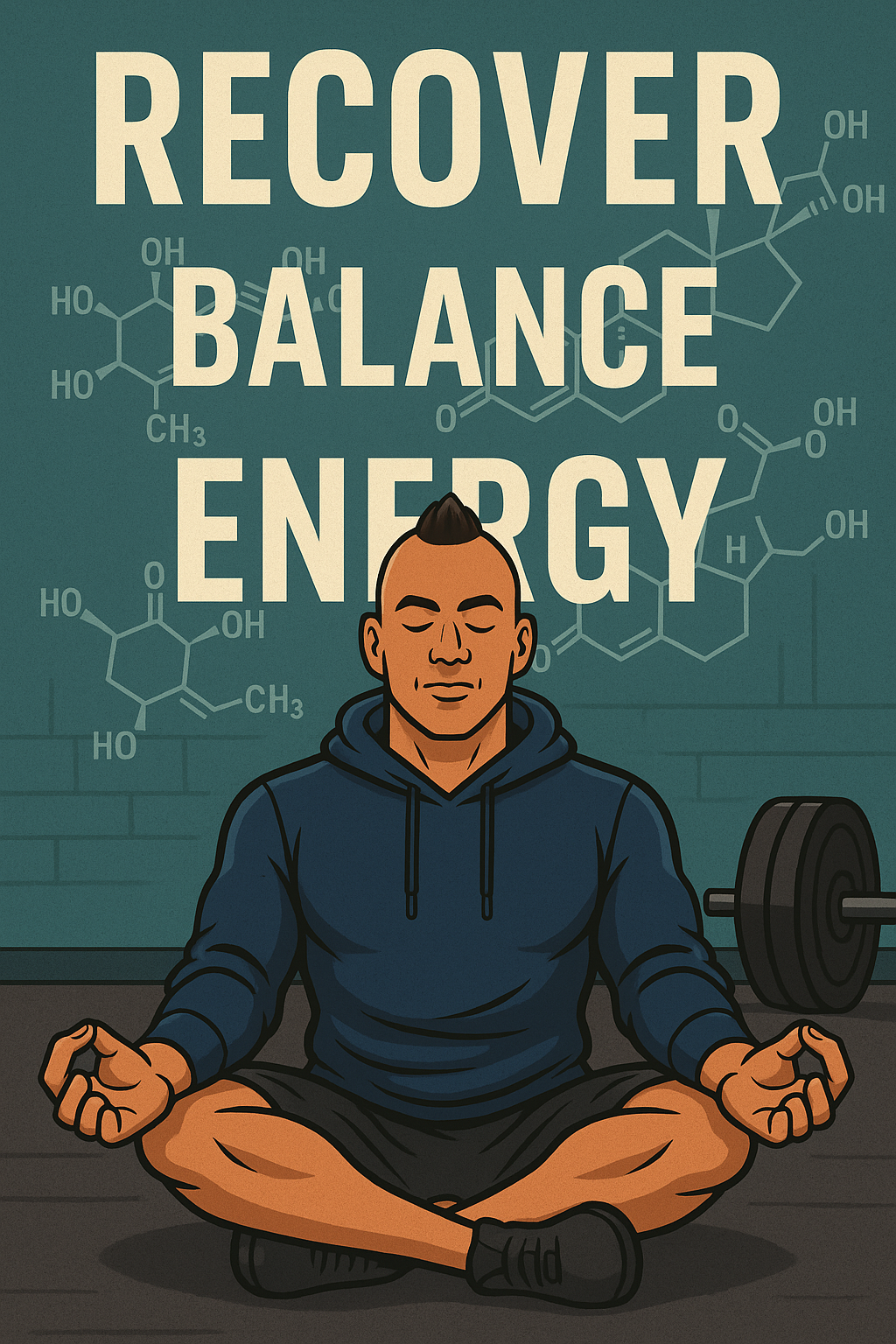
“The body keeps score, and stress writes the story.”
By Coach Ray Traitz | Health, Fitness & Strength Coach
📧 amrapfitness@hotmail.com
Stress isn’t always loud. It doesn’t always scream or show itself through chaos. Sometimes, it whispers quietly—through fatigue, mood swings, disrupted sleep, or that constant feeling of being “wired but tired.”
Coach Ray Traitz knows that stress can be both a silent motivator and a silent killer. Between early mornings, coaching, teaching, financial strain, personal loss, and caregiving, he’s learned that stress doesn’t just affect how you feel—it rewires your body at the hormonal level.
This article explores what chronic stress does to the body, how cortisol becomes the disruptor of energy and longevity, and, most importantly, how to take back control through awareness, recovery, and daily discipline.
Stress isn’t inherently bad. In short bursts, it’s a performance enhancer—what scientists call eustress, the kind that sharpens focus and drives you to perform. But when it becomes chronic, your body enters a state of constant defense, which wreaks havoc on your biology.
Here’s what happens:
The hypothalamic-pituitary-adrenal (HPA) axis signals your adrenal glands to release cortisol, your body’s primary stress hormone.
Initially, cortisol increases alertness, heart rate, and blood sugar to prepare for action.
But when cortisol levels stay elevated for weeks or months, it leads to hormonal imbalances, inflammation, and metabolic dysfunction.
Did You Know?
A 2022 study in Nature Reviews Endocrinology found that prolonged cortisol elevation accelerates biological aging by shortening telomeres—the protective caps on your DNA.
Cortisol is like a double-edged sword. You need it to survive, but too much of it slowly drains vitality.
Symptoms of chronic cortisol overload include:
Midday fatigue even after a full night’s sleep
Increased abdominal fat despite regular exercise
Sugar and caffeine cravings
Poor workout recovery
Disrupted sleep cycles
Mood instability or irritability
Coach Ray has seen this firsthand—in himself and in his clients. Early mornings, long workdays, and emotional strain can push the nervous system into overdrive. What starts as motivation to push harder becomes burnout.
“I used to think fatigue meant I needed more coffee or more discipline. But sometimes, it’s not about pushing harder—it’s about pulling back.” — Coach Ray Traitz
Chronic stress does more than make you tired. It rewires your metabolism and increases the risk of chronic diseases that shorten lifespan.
Physiological impacts include:
Impaired insulin sensitivity, leading to blood sugar instability.
Muscle breakdown (catabolism) due to prolonged cortisol exposure.
Suppressed immune function, making you more prone to illness.
Inflammation, which accelerates aging and disease progression.
Did You Know?
Researchers from Stanford University discovered that people with consistently elevated cortisol levels had a 43% higher risk of developing metabolic syndrome, regardless of diet or exercise level.
Ray’s approach to stress recovery isn’t about escaping stress—it’s about mastering it. Through years of trial, error, and reflection, he’s developed practical systems that help restore energy, balance, and resilience.
1. Structured Recovery
Just as you plan workouts, schedule recovery. Include active recovery days, sauna or cold plunge sessions, and quiet reflection time.
2. Sleep Discipline
Set a fixed bedtime and wake time—even on weekends. Sleep isn’t a luxury; it’s the foundation of hormonal balance.
3. Nutritional Grounding
Prioritize anti-inflammatory foods like wild salmon, avocados, dark leafy greens, and berries. Reduce caffeine and sugar when under stress.
4. Mindful Movement
Incorporate low-intensity activities like walking, yoga, or deep breathing to activate the parasympathetic nervous system—the body’s “rest and digest” mode.
5. Emotional Awareness
Journaling and reflection are part of Ray’s own recovery process. Writing down daily stressors helps prevent emotional overload.
Did You Know?
Practicing 10 minutes of diaphragmatic breathing daily can lower cortisol by up to 30%, according to a 2023 study in Frontiers in Physiology.
Ray often tells his clients:
“Stress is energy—neutral energy. What matters is how you direct it.”
The goal isn’t to eliminate stress but to train your mind and body to handle it better. By developing stress resilience, you strengthen both the nervous system and your mindset for longevity.
In Ray’s own life, this shift was transformational. From rebuilding after loss to managing daily pressures, he’s learned that recovery is a form of discipline—one that allows him to continue coaching, training, and living with purpose.
Did You Know?
People who practice structured recovery (through sleep, mindfulness, and regular exercise) have up to 32% lower mortality rates, according to the Journal of Behavioral Medicine (2021).
“I used to believe that rest was weakness. I thought recovery was something you earned after grinding yourself down. But I’ve learned that recovery is strength. It’s how you come back stronger, clearer, and more alive.”
Chronic stress is inevitable—but burnout isn’t. The key lies in balancing intensity with restoration, work with stillness, and drive with awareness.
Through structured recovery, proper nutrition, and a disciplined mindset, you can transform stress from your greatest enemy into your greatest teacher.
If you’re ready to learn how to manage stress, optimize energy, and enhance longevity, Coach Ray Traitz can guide you through a personalized program that integrates fitness, nutrition, and recovery.
📧 Contact: amrapfitness@hotmail.com
Sapolsky, R. (2017). Behave: The Biology of Humans at Our Best and Worst.
McEwen, B.S. (2019). “Allostasis and the cost of adaptation.” Physiology & Behavior.
Nature Reviews Endocrinology (2022). “Chronic Cortisol and Telomere Shortening.”
Frontiers in Physiology (2023). “Effects of Deep Breathing on Stress Reduction.”
Journal of Behavioral Medicine (2021). “Structured Recovery and Longevity Outcomes.”
Partner warm up
MB chest pass
MB hip toss
MB rotations
MB up and under
Skill
Medicine ball clean
TEAM WOD
3 person TEAMs
15 minute AMRAP
Row
MB cleans
burpees
Warm up
Line drills/ fast feet
Broad jumps
Strict pull ups
Reverse hyper
GHD sit ups
Skill
Sled sprints
Partner WOD
7 rounds of:
Ping pong
Sled sprint
Reverse sled drag
Rest 60 seconds

Living your best life doesn’t require a total overhaul or waiting for the “right moment.” Confidence builds in motion, not in perfection. It begins when you say yes to the first small action that puts your body, brain, and energy in alignment. Whether you’re stuck in indecision, recovering from burnout, or just craving a sense of direction, the way forward starts now. Below, you’ll find specific actions you can take — not someday, but today — to start shifting your momentum. These aren’t theoretical. They are grounded, doable, and designed to make you feel more capable, more connected, and more like yourself again.
Build Mental Traction Through Personal Reflection
Self-confidence can’t grow where there’s no signal of progress, which is why building a reflection habit matters. Even five minutes of quiet writing at the end of the day can help you track your growth through reflection, surfacing patterns you might otherwise miss. It’s not about recording every detail or being poetic; it’s about noticing. When you write down what went well (and what didn’t), your brain starts to associate effort with movement. Over time, you’ll catch your own progress before anyone else does, which trains your sense of personal agency to activate faster and more reliably.
Use Micro-Steps to Build Immediate Momentum
If big goals feel intimidating, there’s a reason: they lack friction logic. Confidence rarely comes from huge leaps, it grows when small things are finished fast. One practical starting point is to set micro‑steps to build confidence. That could mean writing for five minutes instead of an hour, walking one block instead of two miles, or sending a check-in text instead of planning a dinner. This isn’t about low standards, it’s about giving your brain the dopamine loop it needs to keep showing up. You don’t need “motivation” when you can create evidence of capability.
Reset Your System with Outdoor Input
When your head feels foggy or over-revved, it’s not always a mindset issue, it might be sensory starvation. Research shows real cognitive benefits from spending even 5 minutes in green space. The natural world operates on rhythm, not speed. By stepping into it, even briefly, you create a break in the feedback loop that says you have to solve everything from a chair. Movement and sun, trees and air: these things recalibrate your nervous system without you needing to figure out how. Confidence is easier to access when your brain isn’t starved for recovery.
Physical Training as a Confidence Catalyst
Confidence doesn't just come from “believing in yourself.” It comes from proving to yourself that you can do hard things, and physical training is a direct, daily way to do that. The body doesn’t lie. Building consistent movement habits sharpens your focus, increases energy, and builds evidence that your effort produces change. Programs like AMRAP Fitness are structured to help you show up consistently; no guesswork, just action. When the decision is made for you, showing up becomes easier, and the identity shift begins. You’re no longer someone trying to get strong. You are.
Strengthen Your Circle to Strengthen Yourself
You weren’t built to figure everything out alone. In fact, research has shown that social ties strengthen resilience and are some of the most powerful predictors of long-term well-being. But here’s the catch: You have to initiate. That might mean calling someone instead of texting, showing up at a community event, or even being the one who organizes something casual. Confidence expands when you’re mirrored back by people who remind you who you are, not who you’re trying to prove yourself to be. Choose real connection, not performance. Choose presence, not polish.
Create Occasion as a Way to Reclaim Agency
One overlooked form of confidence-building? Taking the lead on shaping moments that matter, even small ones. Creating space for celebration or reconnection doesn’t require a reason; it just requires intention. And it helps to use an invitation maker that lets you bring that idea to life simply. Whether it’s a backyard potluck or a cozy movie night, taking the first step to initiate something social sends a powerful message: “I’m worth showing up for, and so are you.” You don’t have to wait to be invited. You can be the one who makes it real.
Unlock Confidence Through Unstructured Joy
Adults are trained out of play. But research shows that play isn’t just fun, it resets the brain, lowers cortisol, and sparks creativity. The point isn’t what the activity is. It’s that it has no productive outcome. When you tap into joy with adult play, whether it’s a card game, building something, or moving in a way that feels goofy, you signal to your nervous system that the world isn’t just made of pressure. And when your nervous system believes that, your body loosens up. Ideas flow. Energy returns. You feel more yourself. That’s confidence.
Support Energy and Mood Through What You Eat
Food isn’t fuel, it’s information. And your brain is listening constantly. What you eat can change your mood just as directly as a conversation or a workout. That 3 p.m. crash? That might be blood sugar instability, not laziness. That flat mood? It could be a gut-brain signal flagging low nutrient availability. The good news: small upgrades matter. A little more protein at breakfast. A veggie swap at lunch. Less sugar in the afternoon. You don’t need a full reset. You need inputs that help your body trust you again. Start with food that supports that.
Confidence doesn’t wait for the ideal conditions. It grows in the messy, real-time decisions that say, “I’m moving forward, even just a little.” From reflection to movement, from nutrition to play, the habits that build confidence aren’t revolutionary. They’re rhythmic. And they’re ready to be started today. You don’t have to know where this goes. You just have to say yes to the next moment. Because when you build momentum, belief follows. And when belief follows, the life you’ve been imagining starts to look a lot like the one you’re already living.
Elevate your fitness journey with AMRAP Fitness, where our community-driven approach combines training, nutrition, and accountability to help you achieve your health goals, no matter your level or location!