Introduction
Humans are inherently social creatures. While much focus is placed on exercise, nutrition, and recovery, an often-overlooked factor in health and longevity is social connection. Isolation—whether due to work, lifestyle, or personal circumstances—can have profound negative effects on mental, emotional, and physical health.
Coach Ray Traitz has spent years working with clients who have experienced social isolation, and he actively experiments with strategies to encourage connection while promoting fitness, wellness, and overall life satisfaction. In this blog, we’ll explore why connection matters, the consequences of isolation, and actionable strategies to stay socially engaged for better health and longevity.
The Science Behind Social Interaction and Longevity
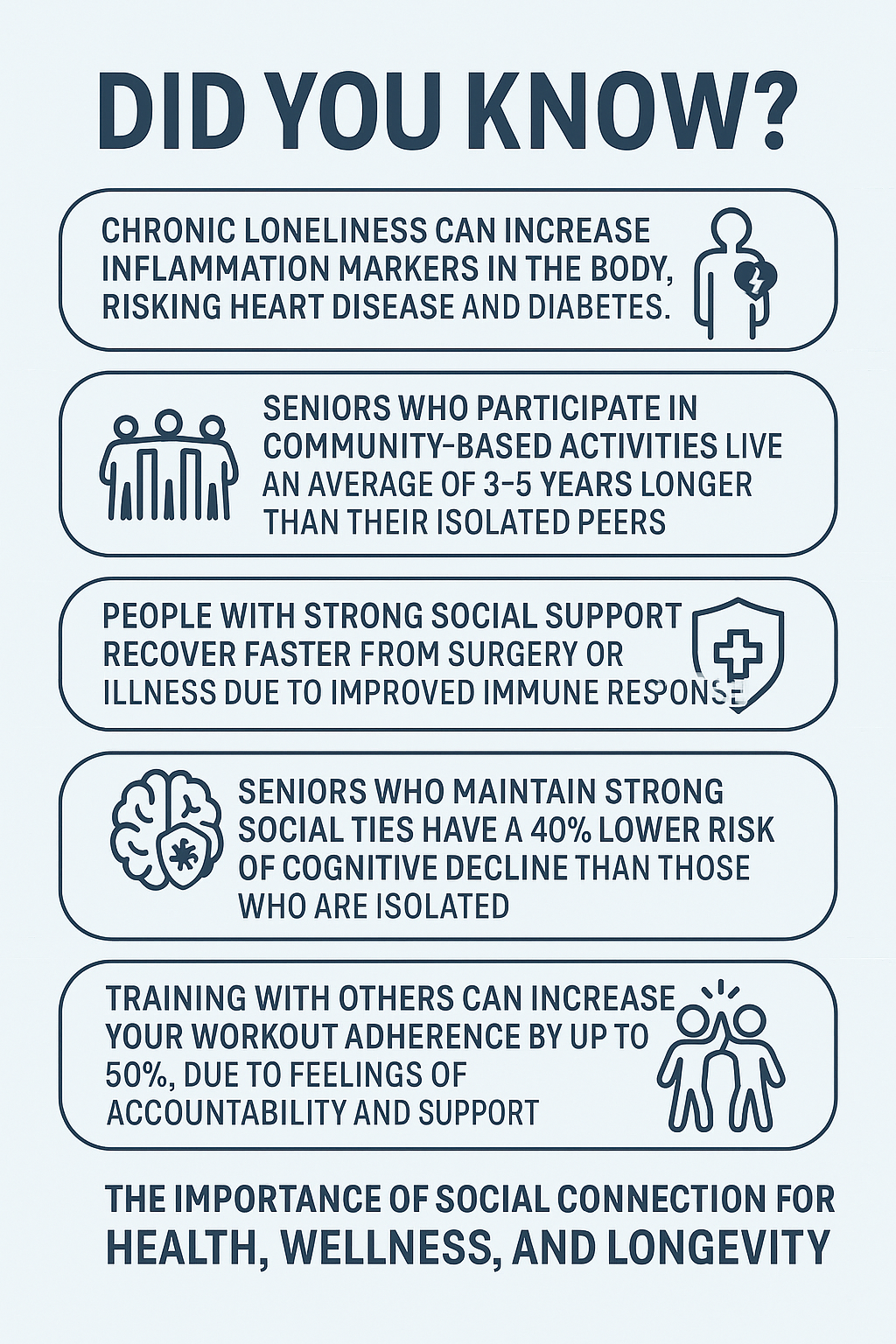
Social isolation has been linked to increased risk of chronic diseases, mental health decline, and decreased life expectancy. Maintaining social ties, on the other hand, positively influences cognitive function, stress resilience, and physical health.
Key Findings:
Loneliness has been associated with a 26% increased risk of premature death.
Positive social engagement improves cardiovascular health, immune function, and stress management.
Social support encourages adherence to fitness and nutrition programs.
Insights from Leading Researchers
Dr. Julianne Holt-Lunstad (Psychology & Longevity)
Loneliness as a Risk Factor: Chronic social isolation increases inflammatory markers and can accelerate aging.
Social Networks as Health Buffers: Strong social connections can reduce the impact of stress on physical health.
Community Engagement: Volunteering and participation in social groups improve mood and long-term well-being.
Dr. Steve Cole (Immunology & Psychosocial Health)
Immune Function Benefits: Socially connected individuals show higher immune resilience.
Stress Hormone Regulation: Positive social interaction reduces cortisol and other stress-related hormones.
Behavioral Motivation: People are more likely to maintain exercise and nutrition routines when socially accountable.
Dr. Laura Carstensen (Longevity & Social Networks)
Quality Over Quantity: Deep, meaningful relationships provide more longevity benefits than large social networks.
Emotional Health: Engaged individuals have lower rates of depression and anxiety.
Cognitive Preservation: Social engagement supports neuroplasticity and slows cognitive decline.
Case Studies on Social Engagement and Longevity
Older Adults and Group Exercise Programs
Community Volunteering and Immune Function
Cognitive Preservation in Socially Active Seniors