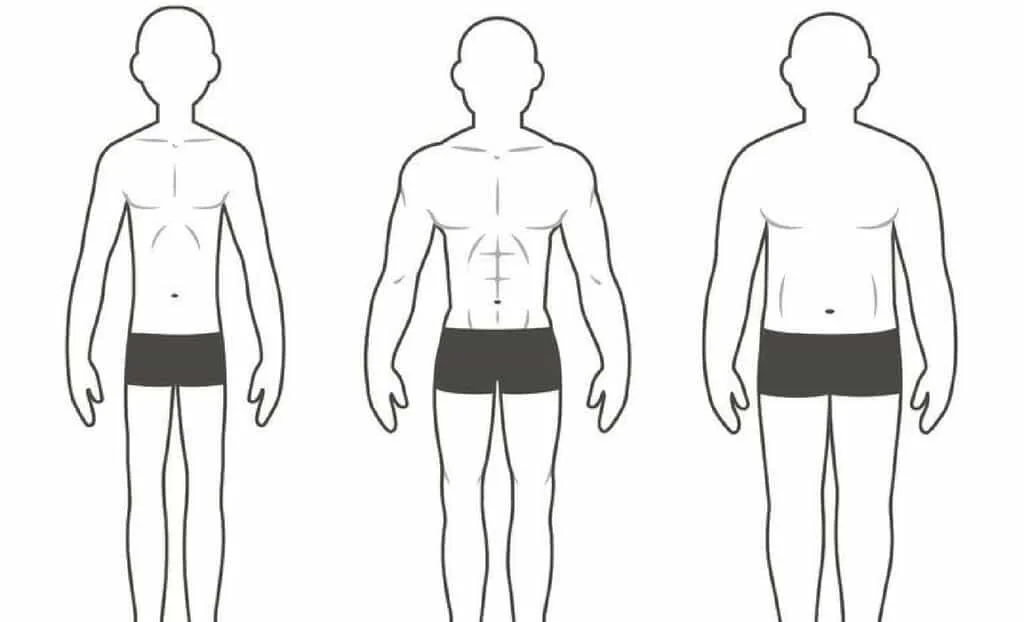
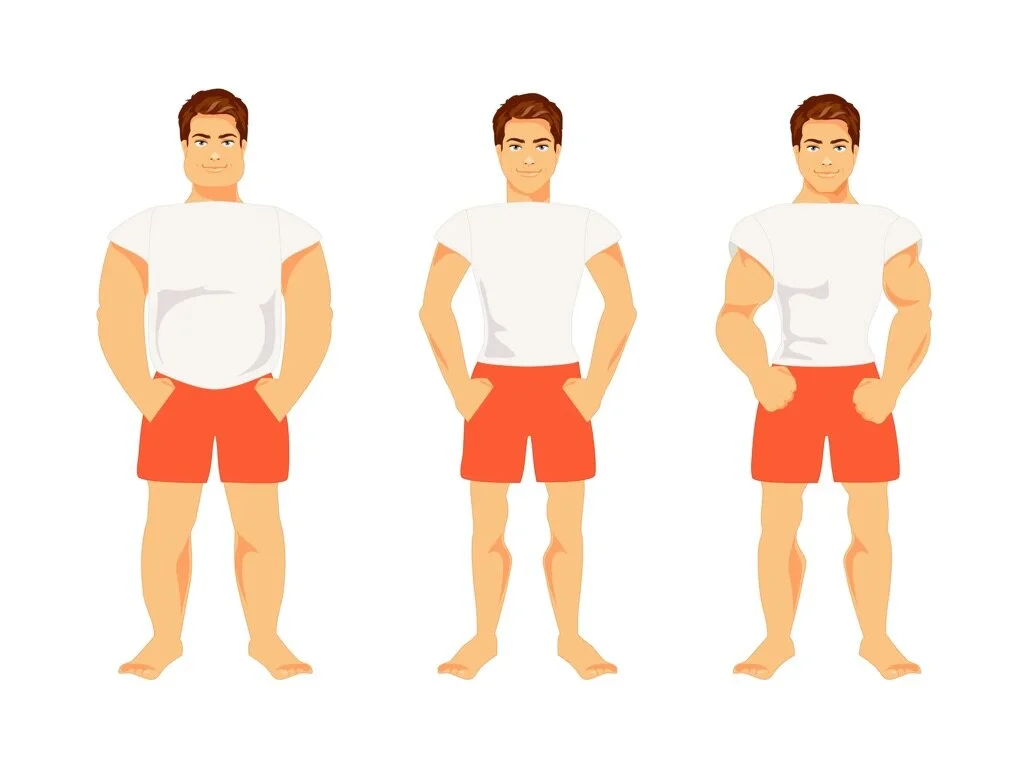
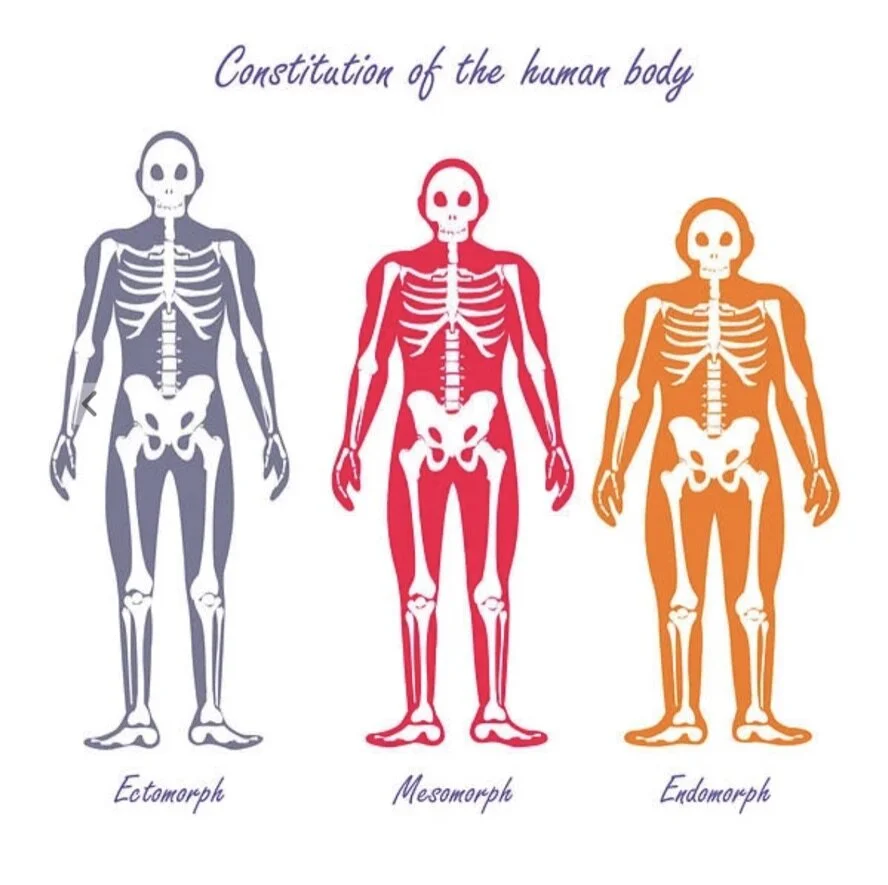
Once you identify which somatotype a client most aligns to, consider the structural and metabolic challenges that are associated with it. Then, tailor the exercise programming and dietary coaching to overcome those hurdles. This will preferentially develop the necessary foundation that each client individually requires.
For the typical new client, the initial, overarching goal to “get in shape” will essentially boil down to a desire to shift their current-state body type toward more mesomorphic physiology.
Obviously, there will be exceptions to this rule – there will always be endomorphs who want to get even bigger to compete in strongman events and ectomorphs who want to keep thin and trim for running ultramarathons – but it rings true for the majority of clients seeking the help of a Certified Personal Trainer or Nutrition Coach.
In light of that average goal, for example, a client who presents predominately as an ectomorph will most likely need dietary and training solutions that focus on muscle protein synthesis and overall mass gain, while typical endomorphic clients will benefit far more from frequent metabolic training and reduced-calorie intakes. So, take a look at each individual, critically evaluate whether you are using the right methods for the body type they currently display and use the following tips to better tailor your programs for maximal success.
HOW TO TRAIN ENDOMORPHS
Training endomorphs should predominantly focus on fat loss techniques until a desirable body composition and functional cardiorespiratory efficiency have been achieved. Resistance training should be used to strengthen muscles and stabilize joints to support more efficient movement elsewhere in life, but this population tends to need cardiorespiratory improvement and fat loss above all.
In the gym, work through OPT Phase 1 and Phase 2, but keep the majority of training sessions focused on metabolic conditioning. Use short rest periods, circuits for resistance exercises, lots of plyometrics (within client tolerance), and use as much additional time as possible for steady-state cardio.
Consistent anaerobic and aerobic training will help endomorphic bodies increase their metabolic efficiency and boost the body’s daily energy requirement. Additionally, recommend that primarily-endomorphic clients increase their non-exercise activity thermogenesis (NEAT) factor as much as possible, moving more during times of the day when they’re not in the gym. Commitment to a less sedentary lifestyle overall is the most important thing for this population to begin overcoming their metabolic challenges.
Due to those slower metabolisms (regardless of the underlying cause) and a surplus of stored energy (body fat), nutritional solutions for primarily endomorphic individuals should focus on techniques to maximize fat loss while still supporting, and even building, the existing lean muscle mass. To accomplish this, a diet that is both low-calorie and high in protein is ideal. Diets containing daily protein of as much as 2.2 grams per kilogram body weight (and sometimes even higher) have been shown safe and effective for supporting existing muscle tissue during times of calorie restriction and weight loss.
After ensuring that daily protein requirements have been met, the remaining pool of calories can come from whatever blend of carbs and fats the individual best tolerates. Some may tolerate a very low-carb “ketogenic” diet that helps them preferentially burn even more fat throughout the day, while others will experience hypoglycemia and its associated nauseating symptoms without enough carbohydrates in their diet.
This rings especially true during workouts, where carbs are important to fuel the higher intensities needed for cardiorespiratory improvement. But regardless of whether carbs or fats are the preferred source of energy, the most important thing is to determine the client’s total daily calorie requirement and keep food intake a bit lower (with still-ample protein) so that the body remains in a negative energy balance with as little muscle catabolism as possible.
TLDR:
Maximize calorie burn and the improvement of metabolic efficiency by primarily using high-intensity, metabolic training techniques.
Consume a high-protein diet with balanced carbs and fats that maintains a slightly negative energy balance.
If you are an Ectomorph and want to gain muscle, check your nutrition. Here are some great recipes for gaining muscle to help you hit your goals.
HOW TO TRAIN ECTOMORPHS
Ectomorphs face the opposite set of challenges as primarily endomorphic individuals. Due to the numerous factors previously mentioned, most ectomorphic clients have developed bodies with highly active metabolisms and “lanky” bone structures, making it hard for them to put on mass and keep it on. For this reason, exercise techniques for hypertrophy and maximal strength should be prioritized, with a greatly reduced focus on cardiorespiratory training to reduce overall energy utilization.
After working through the initial level of the OPT model, Phases 3 and 4 will be of most benefit to average clients in this population. Hypertrophy and maximal strength resistance training are primarily anaerobic in nature and, when combined with longer rest periods, won’t stimulate elevated calorie burn at the moment like more intense, fast-paced exercise programs will. When paired with a consistently positive energy balance, this type of lifting will preferentially help ectomorphs build up their body mass.
To accompany the mass gain-focused resistance training, ectomorphic bodies should eat a mass gain-focused diet. These individuals tend to burn through energy sources faster than most, so ample calories will be needed. Low-carb, fat-loss-focused diets are not recommended here, and in some cases, it may be prudent to recommend that ectomorphic clients even incorporate “mass gainer” nutritional shakes into their diets.
And just like with endomorphic bodies that are working to become more mesomorphic, ectomorphs need high levels of protein too. 1.2 to 1.6 grams per kilogram bodyweight of daily protein has been shown to be optimal for muscle growth, with some individuals requiring up to 2.2.
That protein should then be spaced out every three hours so that muscle protein synthesis (MPS) signals (from the amino acid leucine) are maximized all day long. An additional protein shake at night, right before bed to minimize the fasting window, can also be beneficial for maximizing MPS in individuals with difficulty gaining weight.
TLDR:
Maximize muscle gain using lower-intensity hypertrophy and maximal strength resistance training with longer rest periods.
Consume a high-protein diet with balanced carbs and fats that maintains a positive energy balance.
HOW TO TRAIN MESOMORPHS
There’s no avoiding the fact that mesomorphs have things a bit easier than others. Their metabolisms are relatively efficient, they carry functional – if not athletic – muscle mass and are essentially ready to take on whatever fitness goal they please with minimal foundational work.
But remember, while there are undoubtedly some people who look lean and fit with zero effort, they are the exception to the rule. Most individuals who present a more mesomorphic body composition have developed it as a consequence of numerous factors over their entire lifetime. And for formally endo- or ectomorphic individuals who have improved their lifestyles, diets, and fitness, hard work and discipline are the biggest factors of all.
A mesomorphic body type indicates a client is ready to transition to more advanced forms of power (like SAQ training), athletic, and sport-specific training. Comparatively, diets for mesomorphic bodies should be tailored specifically to health and fitness goals. Protein should be consumed anywhere between 1.2 and 2.2 grams per kilogram bodyweight depending on the intensity of the exercise program, with remaining calories coming from a blend of healthy carbs and fats. Then, if changes in body composition are still desired, the daily calorie load can either be increased or decreased to gain or lose weight, respectively.
TLDR:
Utilize OPT Phases directly aligned to client goals.
Eat specifically for fitness goals and activity, increasing or decreasing daily calories to preferentially control body composition with positive, neutral, or negative energy balances.
Increase protein intakes to as high as 2.2 grams per kilogram of body weight for muscle gain goals; or, keep closer to the 0.8 gram per kilogram of body weight FDA recommended dietary allowance (RDA) when healthy body composition maintenance is all that is desired.
REFERENCES
Bernard, TJ. (2003). Biography of William Sheldon, American psychologist. Encyclopedia Britannica. Accessed online at: https://www.britannica.com/biography/William-Sheldon
Carter, J.E.L. & Heath, B.H. (1990). Somatotyping – development and applications. New York, NY: Cambridge University Press. ISBN 0-521-35117-0
Carter, J.E.L. (2002). The Heath-Carter Anthropometric Somatotype, Instruction Manual. Department of Exercise and Nutritional Sciences, San Diego State University. Accessed online at: http://www.somatotype.org/Heath-CarterManual.pdf
Clark, M.A., Lucett, S.C., McGill, E., Montel, I., & Sutton, B. (2018). NASM Essentials of Personal Fitness Training, 6th ed. Burlington, MA: Jones & Bartlett Learning. ISBN 978-1-284-16008-6
National Academy of Sports Medicine. (2019). Certified Nutrition Coach. Online education program, accessed at www.nasm.org
Toth, T., Michalikova, M., Bednarcikova, L., Zivacak, J., & Kneppo, P. (2014). Somatotypes in Sport. Acta Mechanica et Automatica, 8(1). DOI 10.2478/ama-2014-0005
THE AUTHOR
ANDREW PAYNE
Andrew is a human wellness and fitness expert specialized in developing online education solutions for the modern adult learner. He began his fitness career in the U.S. Army, serving as his company’s physical training program manager. This passion for fitness led Andrew to get certified as an NASM-CPT and go on to earn a MS in Exercise Science and Health Promotion from California University of Pennsylvania. With additional specializations in corrective exercise, athletic performance enhancement, nutrition, and behavior change coaching, he works as part of the Ascend Learning Global Fitness & Wellness Product Development team, helping create fitness education and certification products for the NASM, AFAA, and Premier Global family of fitness brands. Andrew also privately trains his own clients and currently holds a seat on the Ascend Learning Global Wellness & Fitness company wellness committee.
➡️ AMRAP fitness offers nutrition coaching from a certified experienced professional. Contact us for details. ⬅️