7/30 Friday

Warm Up 

Burgner warm up

1. Down and "Finish"

2. Elbows High and Outside

3. Muscle Snatch

4. Snatch Lands at 2", 4", 6"

5. Snatch Drops


Skill Transfer Exercises

1. Snatch Push Press

2. Overhead Squat

3. Heaving Snatch Balance

4. Snatch Balance without a dip

5. Snatch Balance with a dip


WOD

 🎰🃏💰 Casino Royale 💰🃏🎰

Buy in:

6 minute AMRAP

Power snatch + OHS 

*3 minute rest period


Game:

5 minute AMRAP

Squat clean thruster

*3 minute rest period


Cash out:

4 minute AMRAP

Deadlift


Bonus

???

Ray Traitz
7/30 Friday - Strength Movement Of The Week

Boy, You Gotta Carry That Weight!

by Matthieu Hertilus | July 14, 2009

I don’t know about you, but I hate cardio. I despise it with a passion. But I do care about silly things like general health, improved nutrient partitioning, and getting my body-fat percentage into single digits. So I know I have to do some type of general conditioning work. I just can’t bring myself to do it the way most gym rats would, by planting my ass on a stationary bike or plodding along on a treadmill.

T Nation readers know there are lots of better ways to do energy-systems work, no matter if you’re doing it for fat loss, general conditioning, or because you have too much time on your hands. I’d like to add one more to your arsenal.

For the past few months, I’ve been using a simple, but by no means easy, conditioning system with some of my clients and in my own training. We actually look forward to our cardio sessions now, which I assure you was not the case before.

All you do is pick up something heavy and carry it as fast as you can for 100 steps or 60 seconds, whichever is easier for you to calculate.

That’s it.

No trends, no tricks, no machines with televisions attached. This is cardio for real men and women, with real benefits, including these:

CORE STRENGTH

In a recent study published in the Journal of Strength and Conditioning Research, Stuart McGill and colleagues at the University of Waterloo in Canada looked at how hard a variety of middle-body muscles work during Strongman events.

The ones that involved carry — farmer’s walk, super yoke walk, suitcase carries, and keg walks — required substantial core activation. The authors suggest that traditional lifting programs could be improved with the addition of carrying exercises.

When lugging heavy objects, your core is immediately called into action to stabilize your entire body. Your obliques, rectus abdominis, and spinal erectors brace to protect your spine. Your quadratus lumborum and gluteus medius go into action to keep you from wobbling from side to side. Hip flexors (like the psoas and rectus femoris) and hip extensors (gluteus medius and hamstrings) work hard to provide locomotion.

Vary the position of the weight you’re carrying (the routine I included below uses six different variations), and you’ll hit your core muscles in new and completely functional ways. Beat that, floor crunches!

GRIP STRENGTH AND FOREARM DEVELOPMENT

Bodybuilders want muscular forearms for symmetry. Powerlifters and strength athletes need grip strength for performance.

Carries give you a chance to train your forearms heavy and often. See how your forearms feel after carrying a trap bar loaded with 315 pounds for 100 steps, and then tell me how much you miss doing wrist curls.

After a few weeks with these exercises, you’ll wonder why you ever felt the need to use lifting straps on deadlifts, rows, and pull-ups. And you’ll never again complain about how your forearm muscles refuse to grow.

UPPER BACK SIZE AND STRENGTH

McGill’s study found that the lats were substantially worked in the farmer’s walk and suitcase carry. And, although he didn’t measure the activation of the traps and other shoulder stabilizers, we can guess that they have to work hard on some of these exercises, particularly the overhead carry.

FAT LOSS AND CONDITIONING

The workout that follows should take you between 20 and 25 minutes to complete, depending on whether you time your carries or count steps, and how many times you have to set the weight down in the middle of an exercise. That’s a pretty serious challenge to your anaerobic energy systems. You’ll be huffing, puffing, and perspiring enough to qualify your workout space as a federally protected wetland.

VERSATILITY

It doesn’t matter if you’re at a gym, your house, or your local state prison. As long as you have something to carry and room to walk, you can do this workout. I’ve loaded an old backpack with every book I could cram into it, and carried it up and down my driveway to get my cardio in. You can use dumbbells, barbells, weight plates, kettlebells, sandbags, wheelbarrows, stones, kegs, furniture, dead bodies, fat chicks, children, or pets. The more unstable the load is, the tougher your workout becomes.

ABILITY TO WORK AROUND INJURIES

This is the hardest benefit to quantify, but it might be the most valuable to someone with an injury that prevents him from going heavy on basic exercises like bench presses or squats. If you can hold and carry weight without aggravating the injury, you can maintain or even improve your grip strength and overall conditioning while counting down the days until you can get back into your favorite lifts.

➡️ BEAR HUG CARRY ⬅️

It’s easiest to use a standard 45-pound plate. Guys with long arms can try holding two plates. No plates? 


Try a sandbag or atlas stone. The only rule: Lay your hands flat on the object or on each other; no fair interlocking fingers or holding onto your own wrists; that takes work away from your chest and shoulders.


👉🏽 Lucky for you AMRAP Fitness provides such services for kids, tweens, and teens. Contact us for details 👈🏽

Get your teens & kids moving

▶️ CONTACT US FOR DETAILS ◀️ 
Ray Traitz
7//29 Thursday

Warm Up 

Combo Activation #10

7x

Inchworm walkout + scorpion stretch + spider lunge T frame (rotation away from body and reach for sky) + pike fold (return to neutral inchworm) + squat hold


Partner WOD

5x ping pong

7 box jumps/ 10 squat jumps 

7 HSPU/ 12 push ups

4 burpees

7 TTB/ or v ups

Ray Traitz
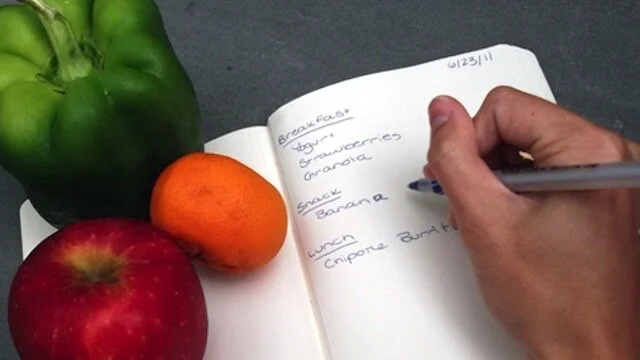
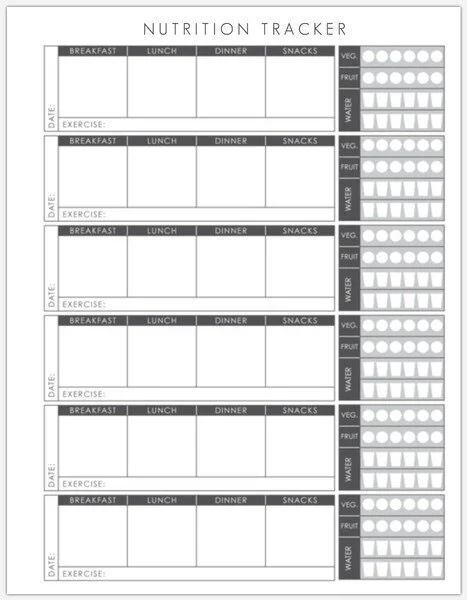
7/29 Thursday - Track your nutrition for results

Why do I need to track my calories?

Here’s a question? Do you track your income, bills, and expenses? If you don’t what happens?

So why aren’t you tracking your food consumption?

If you want to lose excess body fat, improve performance, gain muscle, etc then this is a no-brainer. 

So why doesn’t everyone do it? Lack of education, fear of knowing the truth, and the excuse of no time.


Think about how much time you on your phone doing monotonous things? Have you ever paid attention to how much time is wasted?

If you want results tracking is something you NEED to do.

Try tracking your workouts and nutrition for 2 weeks?

I challenge you!

What do you have to lose?


⭐️ Lucky for you AMRAP Fitness provides nutrition and supplementing advice ⭐️ 

➡️ CONTACT US FOR DETAILS ⬅️

🥑🥥🥩🍖 #nutrition & #supplementation 🥑🥥🥩🍖

Ray Traitz
7/28 Wednesday - Why isn’t your diet working?
AC5047B3-45FA-4E59-B1C5-68BBF0C9D79C.jpeg

By- Alycia Israel

“What am I doing wrong?”

“I can’t seem to figure this out.”

Sound familiar? I hear these things all of the time, and I want to shed some light on why your diet might not be working for you. To clarify, I will focus on fat loss as the target goal here. When it comes to fat loss, very few people can wing it and see decent results. That’s just the reality despite what the detox tea Fit-pos are telling you. 

Sustainable fat loss requires mindfulness and a strategy that is specific to you. So, let’s get to it. These are the top five reasons your diet isn’t working, and how to execute it properly.

1. You aren’t tracking anything.

Simply put, if you can measure it, you can manage it. The truth is, you can attempt to lose body fat without tracking calories or macronutrients. However, it most likely won’t be optimal or sustainable. You may see some results at first but will plateau and end up frustrated at some point. Tracking calories and macros just gives you a roadmap to your destination. Without a map, your journey gets really inefficient and takes forever due to a lot of unnecessary pit stops and hassle.

Tracking also teaches you what is in food and what you respond well to so that you can develop your intuition about food. If your goal is to change your body composition, you can’t eat intuitively without being educated first. Ideally, you can learn about tracking through your fat loss phase and slowly become intuitive as you maintain your goal! That is the whole point. But you can’t get there without putting in the time to build food awareness and knowledge. Tracking is the first stop on your roadmap. If tracking your food is new to you, start with calories first for the first two weeks. Just see where you are naturally falling, and then you can adjust from there. Once you become proficient at tracking your general intake, you can then transition to tracking specific macronutrients.

2. You are tracking incorrectly.

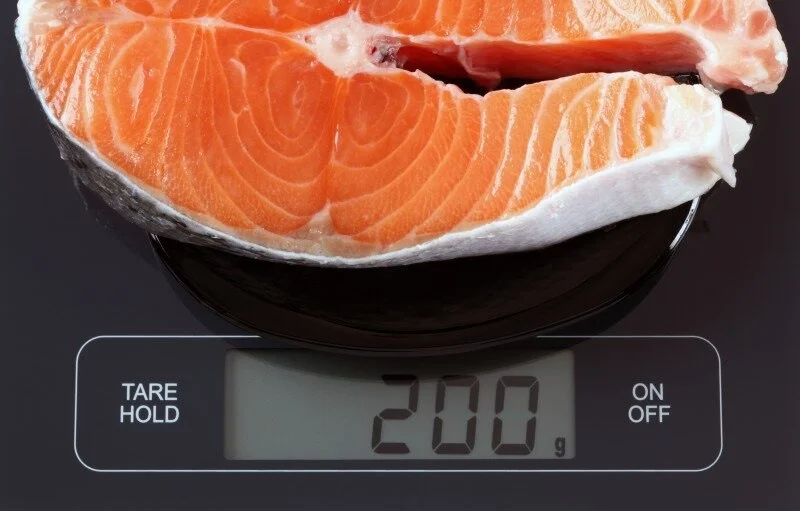
You can track calories and macros all day, but it clearly will not serve its purpose if you aren’t doing it correctly. Eyeballing does not work! Make it a priority to measure your food and learn what true portions should look like for the macros/calories you are shooting for. We always underestimate the caloric loads of the portions we see in restaurants. So, we need to retrain our brains to learn what an actual 4-oz chicken breast looks like. There is also a difference between volume and weight measurements of food. Weighing food is more accurate than using volume measurements. So, especially for someone trying to get pretty lean, weighing food will be the way to go.

Also, keep in mind that food labels can be incorrect when it comes to their gram-to-volume conversions. For example, old-fashioned oats might say something like ½ cup or 40g will yield 27g carbs. However, when I scooped ½ cup oats and weighed it, it was actually 52g. So, if I used the volume measurement all of the time, I would be over my carbs daily without realizing it. This may seem nitty-gritty; however, if you are trying to achieve a more advanced level of leanness, this will matter greatly. This same concept applies to weighing foods cooked versus raw. This is more relevant when it comes to meat. Cooked-weight macros and raw-weight macros are not the same. As we cook meats, water evaporates from the meat, leaving it “lighter” post-cooking. Therefore, 4oz of raw chicken is about 3.2oz cooked for the same macros. So, my suggestion is to use whatever method you feel comfortable with, whether it be volume or weight, but if you are trying to achieve a high level of leanness, stick with weight measurement.

3. Your energy expenditure is too low.

Don’t make your fat loss efforts harder than they need to be. This is why I have clients track their steps to make sure that we are at least in the ballpark of general energy expenditure. If you are unknowingly getting 2,000 steps a day, your caloric deficit will need to be extreme to see fat loss. However, if you can get your daily steps closer to the 8,000+ range, it will be so much easier to lose body fat, and you will be able to eat more to do so! I highly recommend tackling daily steps before adding or increasing structured cardio into your regimen. I see this mistake a lot.

Getting on the StairMaster for 20 minutes three times a week is fine, but if your general activity isn’t high enough, first, you will not get the most out of this additional cardio. Get your daily-steps activity up first, THEN add structured cardio only if needed. Going balls out on cardio out the gate without addressing steps first will just put unnecessary stress on the body without the efficacy that general steps would elicit. We burn more calories from daily activity than we do from workouts! So, make sure that you are picking up the dollars before the pennies here.

4. You are not being patient.

“Fast” and “fat loss” should never belong in the same sentence. Except for this one: Fat loss is not meant to be fast! Our bodies can only lose so much body fat in a day, in a week, in a month. Typically, one pound a week is ideal on average. However, when starting the fat loss phase, you may lose more than this at first from any water retention you were holding. The initial weight drop on the scale during the first week of the fat loss phase is usually a mix of fat and water weight. But the weight loss should slow down. This is a natural and good sign. If you want the majority of your weight loss to come from fat, then you need it to be slow. Stop setting your expectations for what actually does not exist. Fast fat loss is not a real thing! Expecting fat loss to be fast is like expecting Santa Claus to show up at your house on Christmas Day. Not gonna lie—that would be cool. But we learned that this sh*t wasn’t real before we turned 10. Same concept here. The more patience you have, the more successful you will be.

5. You are not addressing your lifestyle.

Set yourself up for success and create an optimal foundation of health before initiating the fat loss phase. Super stressed? Hormones out of whack? Only get four hours of sleep a night? Good luck losing body fat with all of that going on. Don’t get me wrong—you can do it, but it’s going to be a huge pain in the ass. So, take care of your foundation first before you start adding drapes to your windows. Take an honest look at your life. How can you manage stress better? If you feel like sh*t, get a hormone panel done and see what’s going on inside and address it. I’ve had numerous clients start the fat loss phase, and I noticed that their progress wasn’t of the norm, so we got labs run, and lo and behold, their thyroids were clinically low, and their sex hormones were similar to those of a 65-year-old. By addressing these pieces first, we can then set up a much more optimal and efficient fat loss phase in the future. Not addressing underlying issues is going to make fat loss damn near impossible, so getting lifestyle factors in line will serve you in the long run. If not, you will see very subpar results and could actually make those underlying issues worse over time. Sometimes you need to take two steps back to take three steps forward.

I hope that this article gives you some guidance and direction for your fat loss efforts. It truly comes down to the little things we do each day that add up to our ultimate outcome. Take care of the little sh*t first so that you can manifest your goals efficiently, healthfully, and sustainably.

➡️ AMRAP Fitness offers nutrition coaching from a certified experienced professional. Contact us for details. ⬅️

Ray Traitz