Warm up
Keg carry
Strict ring dips
Strict toes to bar
Strict pull-ups
Skill
Keg ground to shoulder
WOD
3 rounds of:
200m run
20 Jump lunges
4 keg G2S


Warm up
Keg carry
Strict ring dips
Strict toes to bar
Strict pull-ups
Skill
Keg ground to shoulder
WOD
3 rounds of:
200m run
20 Jump lunges
4 keg G2S
Burgner warm-up
Down and up
Muscle clean
Front squats
Squat cleans
Skill
Squat cleans & weighted pull-ups
WOD
EMOTM 15 minutes
2 touch and go squat cleans
7 pull-ups
Partner warm-up
MB chest pass
MB hip toss
MB sit ups
MB wall ball
Skill
Box jumps and double unders
Partner WOD
10 x ping pong
10 burpees
20 double unders
7 box jumps
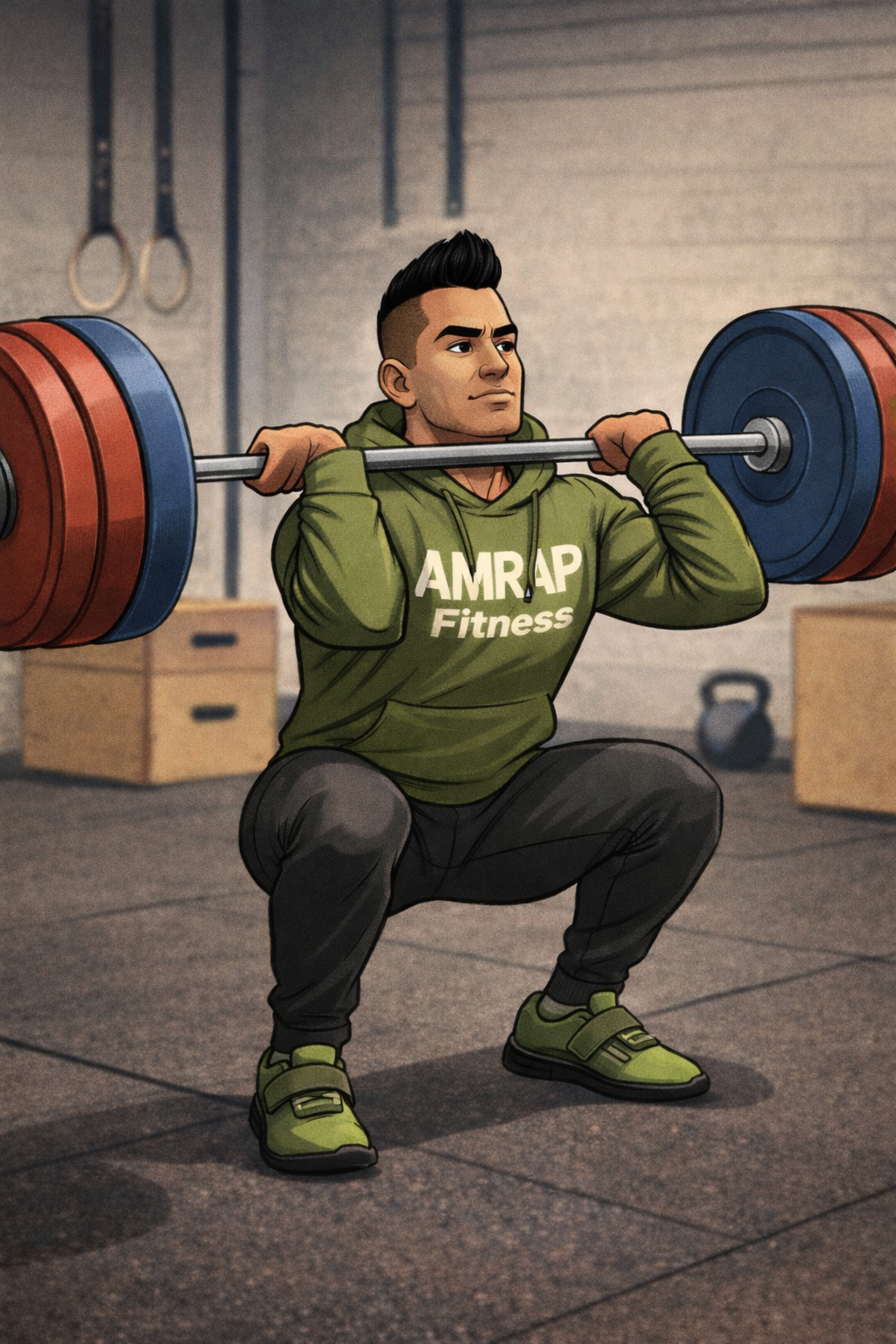
“Envejecer no es perder juventud: es ganar responsabilidad.”
— Una idea clave cuando el objetivo cambia de verse bien a seguir siendo capaz.
Llega un momento en que la vida deja de preguntarte cuánto puedes hacer en tu mejor día…
y empieza a preguntarte qué puedes sostener en tu peor semana.
Duermes poco varios días.
El horario se rompe.
El estrés dispara el apetito.
Las articulaciones se sienten “más viejas” de lo que dice tu edad.
Y aparece la pregunta real:
¿Tu cuerpo todavía puede producir fuerza, proteger tus articulaciones, estabilizar la columna y recuperarse—sin drama?
Por eso esta entrada trata de músculo como medicina.
No músculo para ego.
Músculo para reserva, independencia, estabilidad, control metabólico y longevidad.
Si la Entrada #2 habló de reserva metabólica (absorber estrés y volver a tu base), la Entrada #3 se enfoca en el activo físico que sostiene gran parte de esa reserva:
El músculo esquelético.
La sarcopenia se describe como pérdida de músculo con la edad, pero eso suena pasivo—como si no hubiera nada que hacer.
Los consensos clínicos modernos la entienden como una forma de “fallo muscular”, y lo más importante:
La fuerza baja se considera la señal principal (no la estética, no el peso).
Eso importa porque la fuerza no es “solo gimnasio”. La fuerza representa:
calidad de tejido
salida del sistema nervioso
coordinación y estabilidad
capacidad de reaccionar cuando importa (tropezar, cargar, levantarte del suelo)
La fuerza es capacidad de supervivencia camuflada.
El consenso europeo (EWGSOP2) prioriza la fuerza muscular como el primer criterio de sarcopenia porque se relaciona de forma muy directa con la función.
Muchos creen que metabolismo = perder grasa.
En realidad, el músculo influye en:
control de glucosa
sensibilidad a la insulina
inflamación
estabilidad de energía y apetito
tolerancia al estrés
Cuando se pierde músculo, no es solo un cambio físico: el cuerpo pierde capacidad de manejo.
Así que “músculo como medicina” significa:
más estabilidad
mejor recuperación
menos caos metabólico
más consistencia
Esto no es motivación vacía. Los grandes análisis repiten lo mismo:
Las actividades de fortalecimiento se asocian con menor riesgo de mortalidad total y enfermedades importantes, y muchos resultados muestran beneficios con 30–60 minutos por semana.
La relación dosis–respuesta suele ser no lineal: no necesitas volúmenes extremos para obtener beneficios reales.
Revisiones recientes también informan menor riesgo de mortalidad en quienes realizan entrenamiento de fuerza vs. ninguno.
En varios meta-análisis, el mayor “retorno” aparece al pasar de cero a algo de fuerza semanal—sin necesidad de vivir en el gimnasio.
Muchos adultos no fallan por falta de voluntad.
Fallen por sobrecarga y por perseguir el marcador equivocado:
dolor como prueba
intensidad como identidad
“si no sufro, no cuenta”
todo o nada
Después de los 40, el verdadero objetivo es anti-fragilidad:
Entrenar fuerte a veces—sin depender de entrenar fuerte siempre.
Progresar—sin romper sueño ni articulaciones.
Ser atlético—sin vivir al borde del agotamiento.
El entrenamiento estilo CrossFit puede apoyar la longevidad, si se programa para capacidad, no para caos.
Prioridades:
base de fuerza primero
base aeróbica después (Zona 2)
potencia y conditioning como “condimento”
técnica y mecánica como ley
Cuando se combinan entrenamiento aeróbico y fortalecimiento, los resultados poblacionales suelen asociarse con mejores desenlaces que no hacer ninguno.
Un buen front squat exige:
tronco estable
respiración bajo carga
movilidad útil
calma en incomodidad
En la vida real, eso se traduce en:
levantar cosas con seguridad
estabilizarte si tropiezas
cargar peso sin lastimarte
confianza corporal
Front squat bien entrenado = longevidad en movimiento.
No necesitas perfección. Necesitas repetición sostenible.
Patrones base:
sentadilla (front squat)
bisagra (RDL / peso muerto variante)
empuje
jalón
cargadas (carries)
core anti-rotación / anti-extensión
Reglas de progreso:
subidas pequeñas
deja 1–3 repeticiones “en reserva”
técnica primero
Los marcos clínicos de sarcopenia priorizan fuerza y función porque se conectan directamente con independencia.
Jerarquía:
Zona 2 (20–45 min, conversación posible)
intervalos cortos con dosis moderada
metcons de forma estratégica, no impulsiva
Muchos grupos de expertos recomiendan que adultos mayores consuman más proteína, con rangos frecuentes como ~1.0–1.2 g/kg/día y más en personas activas o en recuperación (~1.2–1.5 g/kg/día), con excepciones importantes (por ejemplo, enfermedad renal avanzada requiere individualización).
Estrategia práctica:
proteína en cada comida
desayuno con proteína
“comidas por defecto” para días caóticos
Durante enfermedad, estrés o recuperación, las necesidades proteicas pueden aumentar porque la prioridad es sostener función y masa magra.
Día 1 – Fuerza (sentadilla)
Front squat (moderado, limpio)
Split squat
Remo + carries
Core
Día 2 – Zona 2
30–45 min a ritmo conversacional
Día 3 – Fuerza (bisagra + press)
RDL / peso muerto variante
Press
Jalón + carries
Core
Día 4 – Opcional
Intervalos breves o técnica + movilidad
Día 5 – Fuerza (full body)
Front squat ligero o técnica
Empuje
Jalón
Carries
Fin de semana
caminata larga + recuperación
He visto (y he vivido cerca) temporadas donde la gente no está “ocupada”—está bajo presión real: duelo, finanzas, sueño roto, responsabilidades familiares.
En esas temporadas, el objetivo no es “marcar abdominales”.
Es no romperse.
El músculo protege:
tu rutina
tus articulaciones
tu identidad física
tu capacidad de volver a la base cuando la vida pesa
Tu yo del futuro no necesita extremos.
Necesita consistencia.
Músculo como medicina.
Fuerza como protección.
Entrenamiento como preparación.
Eso es longevidad.
Consenso Europeo EWGSOP2 (sarcopenia): fuerza baja como señal primaria.
Actividad de fortalecimiento y menor riesgo de mortalidad/enfermedad (meta-análisis): beneficios con 30–60 min/semana.
Entrenamiento de fuerza y relación dosis–respuesta con mortalidad: beneficios no lineales.
Revisión sobre entrenamiento de fuerza y menor riesgo de mortalidad: evidencia reciente.
PROT-AGE (proteína en adultos mayores) + excepción renal: rangos y contexto.
Asociaciones combinadas (aeróbico + fuerza) con mortalidad: enfoque integral.
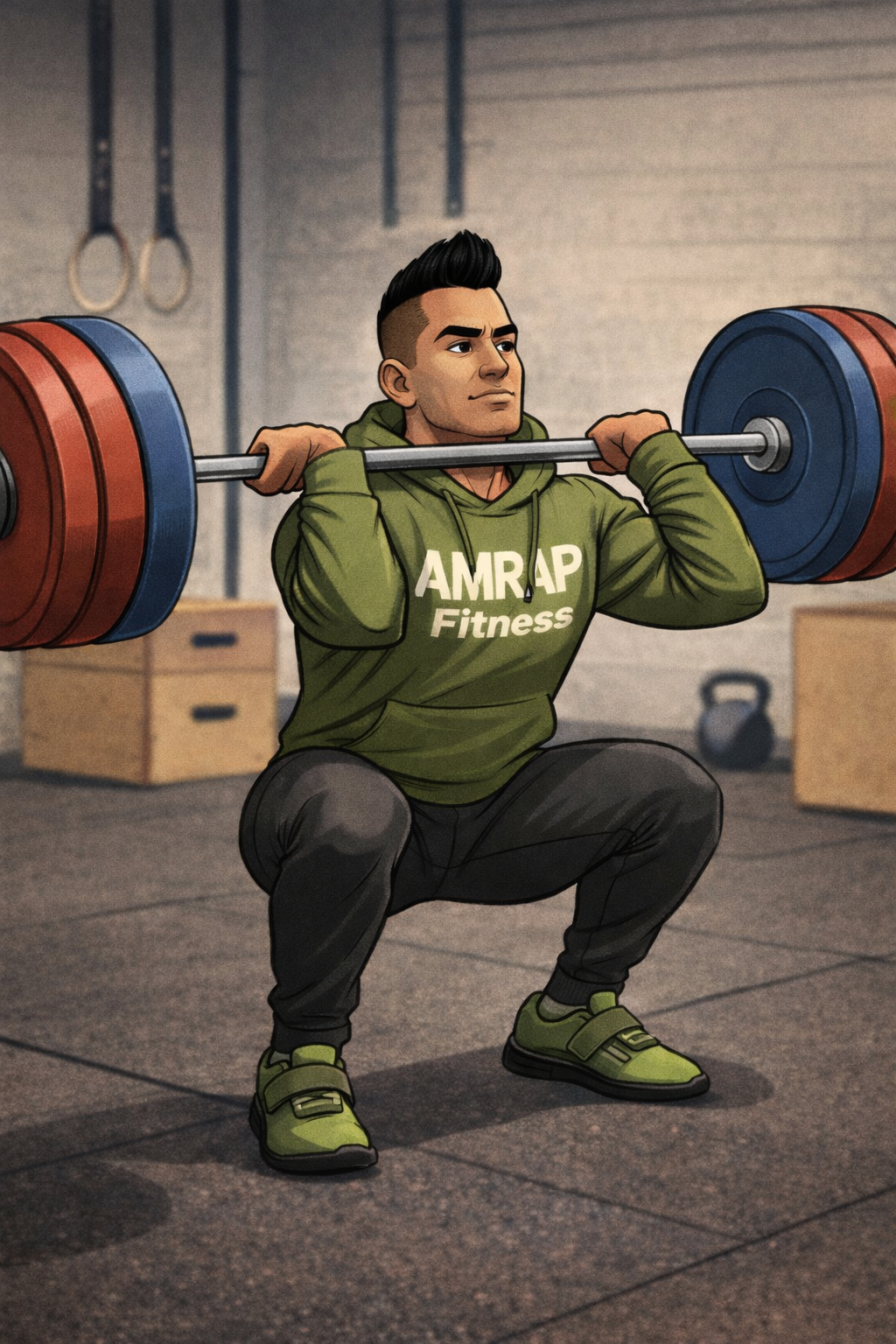
“Aging is not lost youth—it’s gained responsibility.”
— A reminder I come back to when the goal shifts from looking fit to staying capable.
At some point, life stops asking you how much you can lift on your best day…
and starts asking what you can do on your worst week.
You sleep four hours for three nights straight.
Your schedule collapses.
Your stress appetite shows up.
Your joints feel “older” than your driver’s license says.
And then the real question appears:
Can your body still produce force, protect your joints, stabilize your spine, and recover—without drama?
That’s why this entry is about muscle as medicine. Not muscle for ego.
Muscle for buffer, independence, stability, metabolic control, and longevity.
If Entry #2 was about metabolic reserve (your ability to absorb stress and return to baseline), Entry #3 is about the asset that builds a huge portion of that reserve:
Skeletal muscle.
Sarcopenia is often described as “age-related muscle loss,” but that phrasing makes it sound passive—like weather.
Modern clinical consensus frames sarcopenia more like muscle failure, and importantly:
Low muscle strength is treated as the primary signal—not aesthetics, not scale weight.
That matters because strength is not just “gym performance.” Strength is a proxy for:
tissue quality
nervous system output
coordination and stability
your ability to generate force quickly when it counts (catching a trip, carrying groceries, getting up off the floor)
In other words: strength is survival-capacity in disguise.
The European consensus (EWGSOP2) emphasizes muscle strength first in identifying sarcopenia—because strength tracks function more reliably than muscle mass alone.
Most people think metabolism is about fat loss.
In reality, your muscle tissue plays a major role in:
blood sugar management
inflammation regulation
insulin sensitivity
how well you tolerate stress without spiraling
Muscle is one of the largest “storage and processing sites” for glucose. When you lose muscle, it’s not just a physique change—your metabolic system loses capacity.
So when we say muscle is medicine, we’re talking about medicine that improves:
how stable you feel
how stable your energy is
how stable your appetite behaves
how stable your recovery becomes
That’s metabolic reserve, expressed physically.
This isn’t influencer talk. Large analyses keep landing on the same practical conclusion:
Muscle-strengthening activity is associated with lower risk of all-cause mortality and major diseases, with many findings showing benefits around 30–60 minutes per week (a “dose” that doesn’t require living in the gym).
Dose–response analyses suggest a nonlinear relationship—meaning you don’t need extreme volumes to get meaningful benefit.
Recent scientific reviews also report that adults who do resistance training show lower all-cause mortality risk compared with none.
Several meta-analyses show a “sweet spot” effect: some strength training is dramatically better than none, and the biggest returns often appear at modest weekly volume.
Here’s where I’ll keep it real (without turning this into autobiography):
Most adults I coach aren’t failing because they’re lazy.
They’re failing because they’re overwhelmed—and they’re chasing the wrong scoreboard.
They chase:
soreness as proof
intensity as identity
“sweat or it doesn’t count”
all-or-nothing programs
But after 40, the real win is anti-fragility:
You can train hard sometimes—without needing to train hard all the time.
You can progress—without breaking your sleep or your joints.
You can stay athletic—without living on the edge of burnout.
That’s longevity training.
Functional fitness (CrossFit-style training) can absolutely support longevity—when it’s programmed to build capacity, not chaos.
Here’s the pivot:
Strength base first (controlled reps, clean positions)
Aerobic base second (Zone 2 capacity to recover and stay resilient)
Power/conditioning as seasoning, not the main course
Skill + mechanics stay sacred (your joints are not disposable)
Balanced movement training (aerobic + muscle-strengthening) is consistently associated with better mortality outcomes than doing neither—and often better than treating training as only one category.
Let’s talk front squats—not as a flex, but as a symbol.
A good front squat requires:
upright torso strength
trunk stiffness without rigidity
ankle/hip mobility that stays usable
breathing under load
calm in discomfort
In real life, that becomes:
picking something up safely
bracing your spine when you slip
carrying awkward loads
staying confident in your body
So yes—front squats are a longevity movement when trained intelligently.
You don’t need perfection. You need repeatability.
Non-negotiable movement patterns:
squat (front squat variation)
hinge (RDL / deadlift variation)
push (press / push-up)
pull (row / pull-up progression)
carry (farmer carry / suitcase carry)
trunk (anti-rotation, anti-extension)
Programming rules that keep adults improving:
progress slowly (add 2.5–5 lbs, or 1–2 reps)
keep most sets 1–3 reps in reserve (not failure every day)
treat form like a contract with your future self
Sarcopenia frameworks emphasize function—strength and performance—because those elements map directly to real-world independence.
If you’re always crushed, you’ll eventually stop.
The longevity-friendly conditioning hierarchy:
Zone 2 (conversational pace, 20–45 min)
Short intervals (carefully dosed, not daily)
Metcons (sparingly, programmed, not impulsive)
This protects your ability to lift, sleep, and recover—which protects your ability to stay consistent.
Protein is one of the simplest levers for preserving muscle with age.
Many expert groups recommend higher protein intake for older adults—often in ranges like ~1.0–1.2 g/kg/day, and more (e.g., ~1.2–1.5 g/kg/day) for active people or during stress/illness—with important exceptions, such as advanced kidney disease where guidance should be individualized.
Practical coaching approach:
protein at every meal
prioritize breakfast protein (most people under-eat it early)
keep “default options” available (Greek yogurt, eggs, lean meats, shakes, beans + rice combos)
Protein guidance for older adults often increases during illness, recovery, or high training demand—because the goal is maintaining function, not just hitting a macro target.
Power matters. Fast force production protects you when you trip, slip, or need to move quickly.
But power for longevity doesn’t mean reckless maxing.
Low-risk power options:
medicine ball throws
kettlebell swings (when hinge mechanics are solid)
low-volume Olympic lift technique (submax, crisp)
jumps only if joints tolerate them (and you land well)
The rule: power is earned, not forced.
Day 1 – Strength (Squat focus)
Front squat (moderate, crisp reps)
Split squat
Row + carry
Trunk work
Day 2 – Zone 2
30–45 minutes conversational pace (bike, incline walk, row)
Day 3 – Strength (Hinge + press)
RDL or deadlift variation
Overhead press
Pull + carry
Trunk work
Day 4 – Optional short conditioning
8–12 minutes intervals (not a death march)
Or technique + mobility if life is heavy
Day 5 – Strength (Full body + athletic)
Front squat light technique OR clean pulls
Push-ups/dips progression
Pull-ups progression
Loaded carries
Weekend – Movement + recovery
long walk, mobility, light sled, play, breathe
This is what “anti-fragile” looks like: enough stress to adapt, not so much you collapse.
I’ve coached through seasons where people weren’t just “busy.”
They were dealing with real pressure—grief, financial strain, broken sleep, identity changes, relationship stress.
In those seasons, the goal is not “get shredded.”
The goal is don’t break.
Muscle becomes a form of protection:
it keeps your routine from evaporating
it stabilizes your joints when stress tightens everything
it gives you a physical identity that doesn’t depend on perfect circumstances
Muscle is something life can’t easily take from you—if you train it with respect.
Your future self doesn’t need you to be extreme.
Your future self needs you to be consistent.
Build muscle like it matters—because it does.
Not as vanity. As capability.
Not as punishment. As preparation.
That’s not gym culture. That’s longevity.
EWGSOP2 (Cruz-Jentoft et al.). Sarcopenia revised European consensus: low strength as primary parameter.
Momma et al. Muscle-strengthening activity and lower risk of mortality/disease (systematic review/meta-analysis).
Shailendra et al. Resistance training dose–response and mortality risk.
Paluch et al. Resistance exercise training and mortality risk overview.
PROT-AGE Study Group (Bauer et al.). Protein recommendations for older adults (with kidney disease exception).
López-Bueno et al. Combined aerobic + muscle strengthening associations with mortality.