Burgner warm up
Down and up
Scarecrow
Muscle snatch
Snatch grip push press
Drop
OHS
Hang power snatch
Skill
Power snatch & double unders
WOD
CF Open 11.1
10-minute AMRAP
30 Double unders
15 Power snatches, 75# / 55#


Burgner warm up
Down and up
Scarecrow
Muscle snatch
Snatch grip push press
Drop
OHS
Hang power snatch
Skill
Power snatch & double unders
WOD
CF Open 11.1
10-minute AMRAP
30 Double unders
15 Power snatches, 75# / 55#
Warm up
2 minutes of double unders
Hand walk
Bucket work
Leg lifts on dip bars
Hollow rocks
Super rocks
Skill
HSPU & pistols
WOD
“Cindy” or “Mary”
5 pull-ups/10 push-ups/ 15 squats or 5 HSPU/10 pistols/ 15 pull-ups
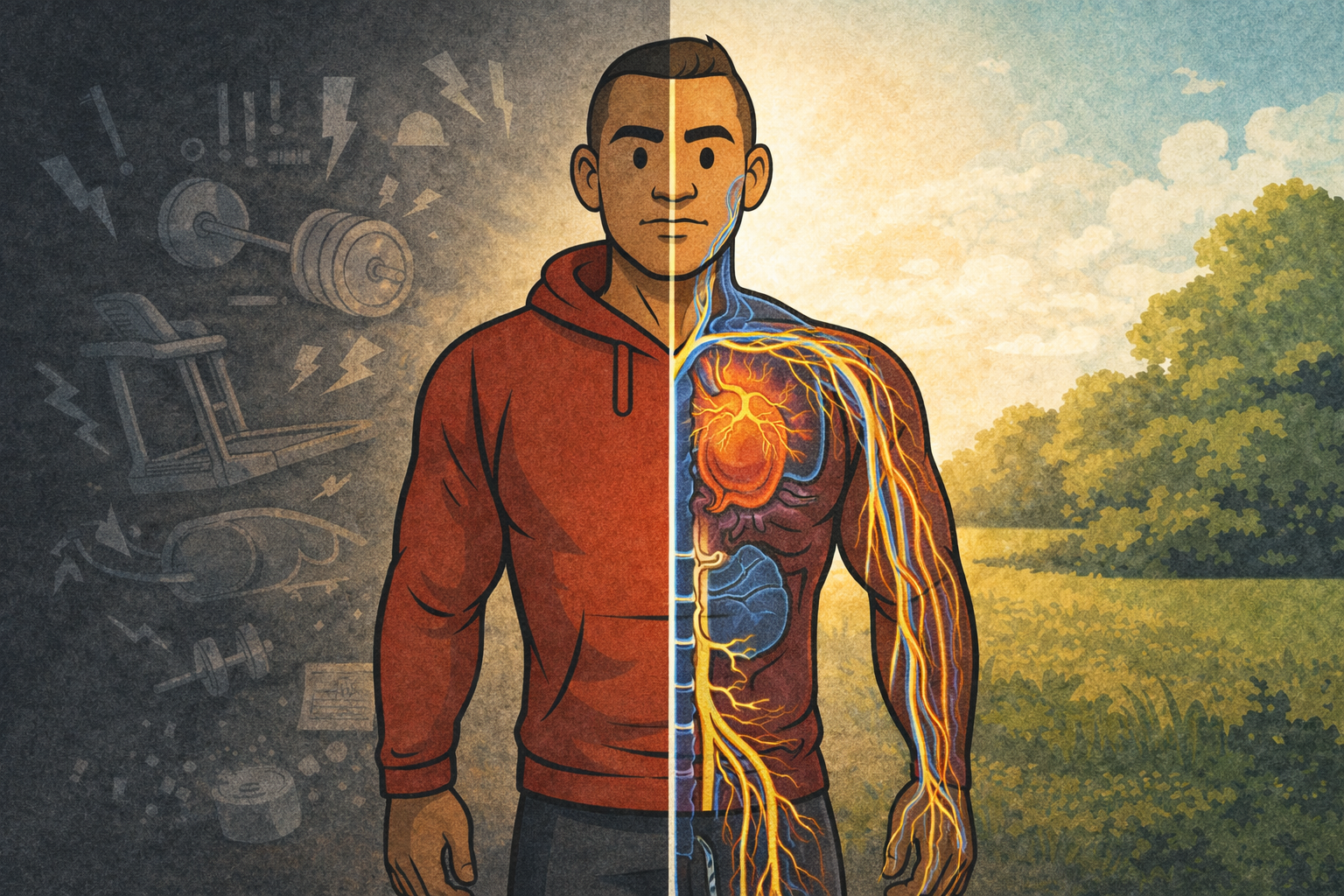
“The body remembers what the mind tries to forget.”
Most people think health problems start in the body.
A bad knee.
Stubborn fat.
Poor sleep.
Chronic fatigue.
Digestive issues.
Recurring injuries.
Binge eating.
Brain fog.
So they attack the symptoms:
Train harder
Eat less
Push more
Restrict further
Add supplements
Chase discipline
But what if the body isn’t broken?
What if the body is responding?
What if your fatigue, injuries, weight struggles, and emotional swings aren’t failures — but messages?
The truth many people aren’t ready to hear is this:
The body keeps the score.
And if stress, trauma, grief, pressure, and unresolved emotion are ignored long enough, the body will express them — whether you want it to or not.
For most of my life, I believed movement solved everything.
And to be fair — movement does solve a lot.
But there came a season where training harder didn’t bring relief.
Eating cleaner didn’t bring peace.
Discipline didn’t bring clarity.
My body started responding in ways that confused me:
Energy swings
Sleep disruption
Tightness that wouldn’t resolve
Fat gain that didn’t match effort
Weekend binge cycles
Emotional crashes
And I realized something uncomfortable:
My body was carrying what my mind had no place to put.
Loss.
Grief.
Anger.
Fear.
Pressure.
Loneliness.
Responsibility.
I wasn’t weak.
I wasn’t undisciplined.
I was overloaded.
And my body was doing exactly what it’s designed to do — protect me.
When stress becomes chronic, the nervous system stays in survival mode.
This leads to:
Elevated cortisol
Increased inflammation
Insulin resistance
Suppressed immune function
Disrupted sleep
Slower recovery
Did You Know?
Chronic stress has been shown to age cells faster by shortening telomeres — the protective caps on DNA associated with longevity.
Your body doesn’t care if the stress comes from:
Trauma
Work pressure
Divorce
Financial instability
Relationship loss
Emotional suppression
Stress is stress.
And the body records it all.
High cortisol tells the body:
Store fat
Hold water
Preserve energy
Reduce muscle-building signals
This is why people under chronic stress often experience:
Stubborn belly fat
Muscle loss
Increased cravings
Poor glucose control
Not because they’re failing — but because their body is prioritizing survival.
Did You Know?
Elevated cortisol can blunt fat loss even in a calorie deficit.
Research from neuroscience and trauma physiology shows that unresolved emotional stress is stored in:
Muscle tone
Fascia
Breathing patterns
Posture
Movement patterns
This is why:
Old injuries resurface
Tightness doesn’t resolve
Mobility stalls
Pain moves around the body
The issue isn’t mechanical — it’s neurological.
In fitness culture, we’re taught:
Grind harder
Ignore feelings
Earn rest
Punish weakness
But this approach fails when the nervous system is overwhelmed.
Pushing harder under chronic stress:
Raises cortisol further
Worsens recovery
Increases injury risk
Reinforces binge–restrict cycles
Disconnects you from body awareness
Did You Know?
Athletes under chronic stress have significantly higher injury rates — even when training volume stays the same.
Your body isn’t lazy.
It’s asking for regulation.
Here’s the powerful shift:
Movement isn’t just for burning calories — it’s for processing stress.
But not all movement does this equally.
Effective stress-releasing movement:
Strength training (done with control, not punishment)
Walking
Breathing-based mobility
Low-intensity aerobic work
Intentional recovery
These forms of movement signal safety to the nervous system.
Safety allows release.
Slow breathing activates the vagus nerve
Walking reduces cortisol more effectively than intense cardio under stress
Strength training improves emotional regulation
Consistent movement improves sleep architecture
Nervous system regulation improves fat loss outcomes
I’ve seen this pattern repeatedly in clients:
People doing everything right on paper — yet struggling.
Once we addressed:
Stress load
Sleep
Emotional bandwidth
Recovery
Expectations
The body responded.
Fat loss resumed.
Energy returned.
Cravings softened.
Strength stabilized.
Mood improved.
Not because we did more — but because we did what the body needed.
Listening doesn’t mean quitting.
It doesn’t mean being soft.
It doesn’t mean giving up standards.
It means:
Adjusting intensity
Honoring recovery
Scaling when necessary
Choosing longevity over ego
Creating space for processing
This is strength.
Longevity isn’t built by ignoring signals.
It’s built by responding to them intelligently.
Ask yourself:
Am I tired or unmotivated?
Am I hungry or emotionally depleted?
Am I injured or overwhelmed?
Am I stuck — or holding something unprocessed?
The body answers honestly.
We just have to listen.
Your body is not your enemy.
It’s your ally — even when it feels inconvenient.
It holds your story.
It holds your stress.
It holds your resilience.
It holds your survival.
When you learn to work with it instead of against it…
That’s when true health — and longevity — begins.
If you want help understanding what your body is telling you — and how to train, eat, and live in a way that supports longevity — I can help.
📩 amrapfitness@hotmail.com
Harvard Medical School
Journal of Neuroscience
American College of Sports Medicine
Bessel van der Kolk, The Body Keeps the Score
National Institute on Aging
TEAM Saturday
Partner warm-up
MB chest pass
MB hip toss
Wall ball
Skill
Review the movement standards
WOD
“Murph”
Run 1 mile
100 pull-ups
200 push-ups
300 air squats
Run 1 mile