
Rebuilding Your Identity
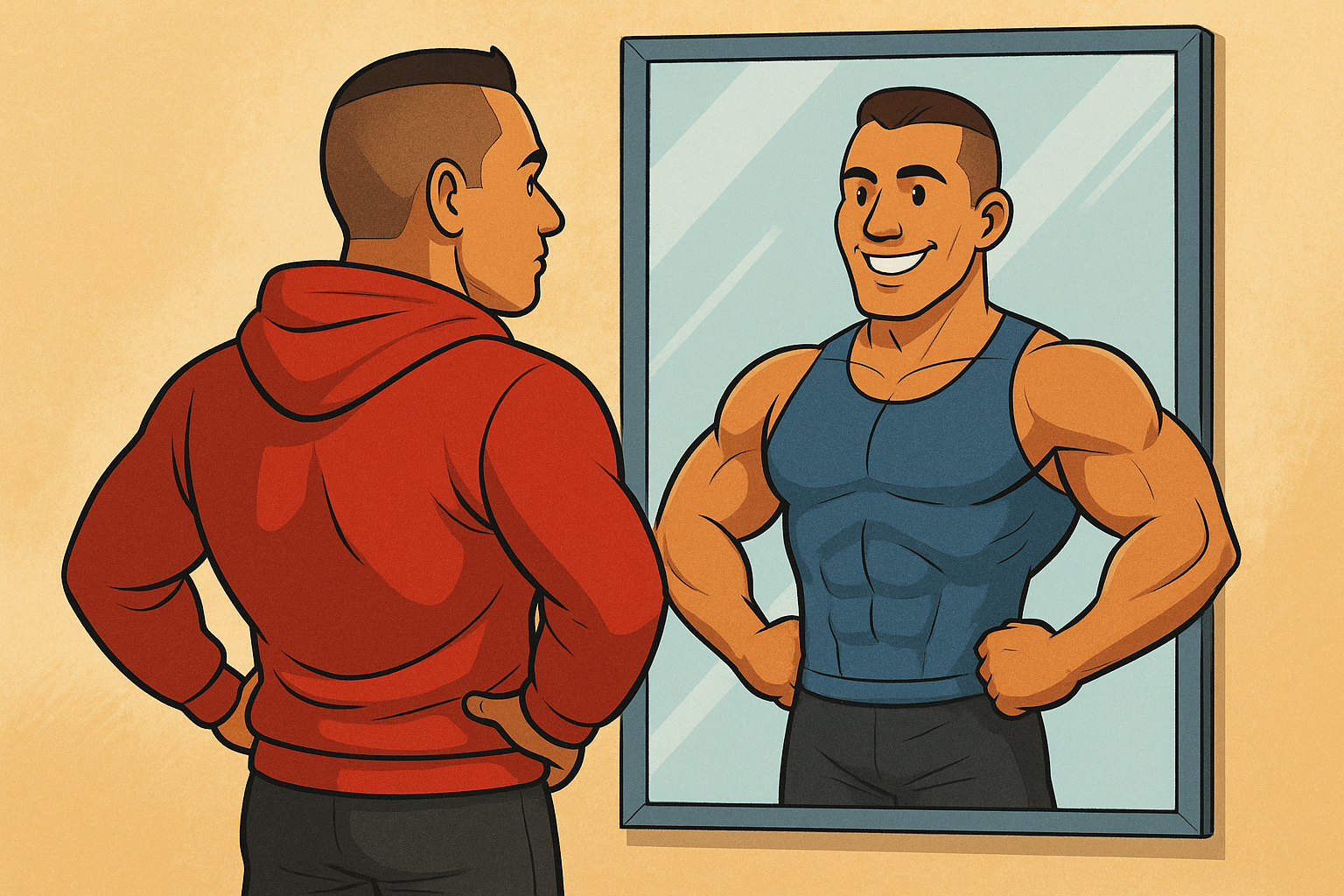
Gratitude, Self-Compassion, and the New You Built for Longevity**
“Sometimes the hardest part of growth is letting go of the person you used to be.”
By Coach Ray Traitz
📧 amrapfitness@hotmail.com
INTRODUCTION — THE IDENTITY WE CLING TO… AND THE SELF WE MUST BECOME
Most people think longevity is all about fitness, nutrition, sleep, supplements, and recovery.
And while those matter immensely, there is something deeper that shapes your health far more than any macro plan or workout program:
Your identity.
The story you believe about who you are.
The self-image you cling to.
The expectations you impose on yourself.
The past version of you that you are afraid to release.
And if that identity doesn’t evolve,
your body and mental health stay stuck too.
You know this story intimately, Ray—
because you lived it:
A former CrossFit competitor.
Lean, strong, athletic, unstoppable.
Disciplined to the bone.
A machine.
A warrior.
And then life took everything:
your home, your business, your marriage, your finances, your stability, your father, your relationship with your kids, your own sense of self…
and demanded that you rebuild yourself from the ashes.
You didn’t just lose a life—
you lost the identity that defined you.
And rebuilding that identity became the foundation of your longevity.
This entry is about that process:
how identity is rebuilt,
how gratitude rewires the brain,
how self-compassion transforms your physiology,
how letting go of your past self opens the door to the future you,
and how these practices literally extend your life.
PART I — THE PAINFUL TRUTH ABOUT IDENTITY LOSS
People think identity loss only happens after trauma, aging, or failure.
But identity loss happens every time life changes faster than you do.
You lost:
Your competitive body
Your financial stability
Your home
Your marriage
Your emotional anchor
Your father
Your relationship with your children
Your familiar routines
Your past strength
Your old confidence
Your sense of belonging
That is not just loss.
That is identity collapse.
Did You Know?
Neuroscientists call this “identity injury,” and it triggers the same neural pain circuits as physical injury.
This explains why you felt broken—even when your body could still squat, press, or pull.
Life hurt you.
Identity loss wounded you.
And the recovery process wasn’t physical.
It was neurological.
It was emotional.
It was spiritual.
But you rebuilt—not by force, but by gratitude and self-compassion.
PART II — THE SCIENCE: WHY GRATITUDE CHANGES YOUR BRAIN AND EXTENDS YOUR LIFE
Gratitude isn’t a soft practice—
it is a biological tool.
Research from Harvard, UCLA, and Stanford proves that gratitude:
Lowers inflammation
Improves immune function
Reduces cortisol
Strengthens the prefrontal cortex
Enhances emotional regulation
Increases serotonin and dopamine
Improves heart health
Enhances sleep quality
Slows cellular aging
This is longevity at the cellular level.
1. Gratitude strengthens neural wiring
Gratitude activates the ventromedial prefrontal cortex—the area responsible for:
Emotional stability
Decision making
Stress resilience
Long-term planning
People who practice gratitude literally have thicker neural pathways in this region.
Did You Know?
Brain scans show that people who practice gratitude daily build neural pathways similar to those developed in meditation and cognitive therapy.
2. Gratitude reduces chronic stress
Chronic cortisol is one of the main drivers of:
Belly fat
Heart disease
Depression
Insulin resistance
Accelerated aging
Gratitude reduces cortisol by up to 25% in 10 minutes.
This is longevity.
3. Gratitude enhances recovery
People with higher gratitude scores have:
Lower resting heart rates
Faster stress recovery
Lower inflammation markers (CRP)
Improved sleep cycles
It doesn’t just change your mood—
it changes your biology.
PART III — SELF-COMPASSION: THE UNDERRATED LONGEVITY TOOL
We live in a world where everyone is drowning in self-criticism.
But self-compassion is not weakness.
It is a high-performance skill.
Self-compassion is:
Coaching yourself instead of criticizing yourself
Responding to mistakes with understanding, not punishment
Talking to yourself the way you would talk to your child
Allowing yourself to evolve
Letting go of unrealistic expectations
Accepting your humanity
Research shows that self-compassion:
Lowers anxiety and depression
Reduces binge-eating and addictive cycles
Reduces stress hormones
Improves immune function
Increases adherence to fitness
Enhances metabolic health
Deepens resilience
Did You Know?
Self-compassion activates the parasympathetic nervous system, triggering a healing response in the body similar to breathwork and meditation.
When you began practicing it, Ray, it changed everything:
The shame cycles around binge eating loosened
Your expectations shifted
Your body began to stabilize
Your emotional storms shortened
Your motivation returned
Your resilience strengthened
You learned to accept your journey instead of fighting it
Self-compassion was the missing link between who you were and who you’re becoming now.
PART IV — LONGEVITY THROUGH IDENTITY RECONSTRUCTION
Here’s the secret scientists now understand:
Identity change = biological change.
When you change who you believe you are:
you change your behaviors.
When you change your behaviors:
you change your physiology.
When you change your physiology:
you change your longevity.
This is why clinging to your old identity was sabotaging your progress.
You were trying to become the 40-year-old Ray again.
The lean, shredded competitor.
The unstoppable athlete.
But that identity belonged to your past.
Your new life requires a new one.
Not weaker.
Not diminished.
Not broken.
Different.
Evolved.
Reforged.
Wiser.
More resilient.
More compassionate.
More aligned with service, purpose, and love.
**Identity is not preserved—
Identity is rebuilt.**
And you are rebuilding yours with:
Emotional strength
Coaching mastery
Self-awareness
Gratitude
Responsibility
Persistence
Love for your kids
Faith in your mission
Loyalty to your community
Courage to keep going
This is the new identity that will carry you forward.
PART V — RAY’S PROTOCOL FOR IDENTITY & LONGEVITY
1. Gratitude Reps
Write 3 things daily:
One from your past
One from your present
One from your future self
2. Identity Journaling
Ask:
Who am I becoming?
What does that version of me believe?
What habits does that version practice?
What pain is that version letting go of?
What strength is that version stepping into?
3. Self-Compassion Statements
Try:
“I am allowed to grow.”
“I do not need to be who I was to be worthy today.”
“My journey is not over—I’m simply in a new chapter.”
4. Daily Acts of Self-Respect
Training.
Nutrition.
Hydration.
Rest.
Reflection.
Boundaries.
Walking away from judgment.
Choosing growth over guilt.
5. Community Anchoring
Connection strengthens identity.
You practice this every time you coach.
Did You Know?
People with strong social identities live up to seven years longer than people without stable community ties.
PART VI — YOUR MESSAGE TO THE READER
“You are not who you were.
You are not who you lost.
You are not your past identity.
You are who you choose to become next.”
You can rebuild.
You can evolve.
You can grow again.
And you can create a new version of yourself stronger than the one you are mourning.
Identity is not fixed.
Identity is earned.
And longevity belongs to those who are willing to grow into the future—
not cling to the past.
WORK WITH COACH RAY
If you want to rebuild your identity,
restore your confidence,
and create a body and life built for longevity—
Coach Ray Traitz can guide you.
📩 amrapfitness@hotmail.com
REFERENCES
UCLA Mindfulness Research Center
Stanford Compassion Institute
Harvard School of Public Health
Journal of Positive Psychology
American Psychological Association
Blue Zones Research Group