
Becoming Someone Who Can Handle Life
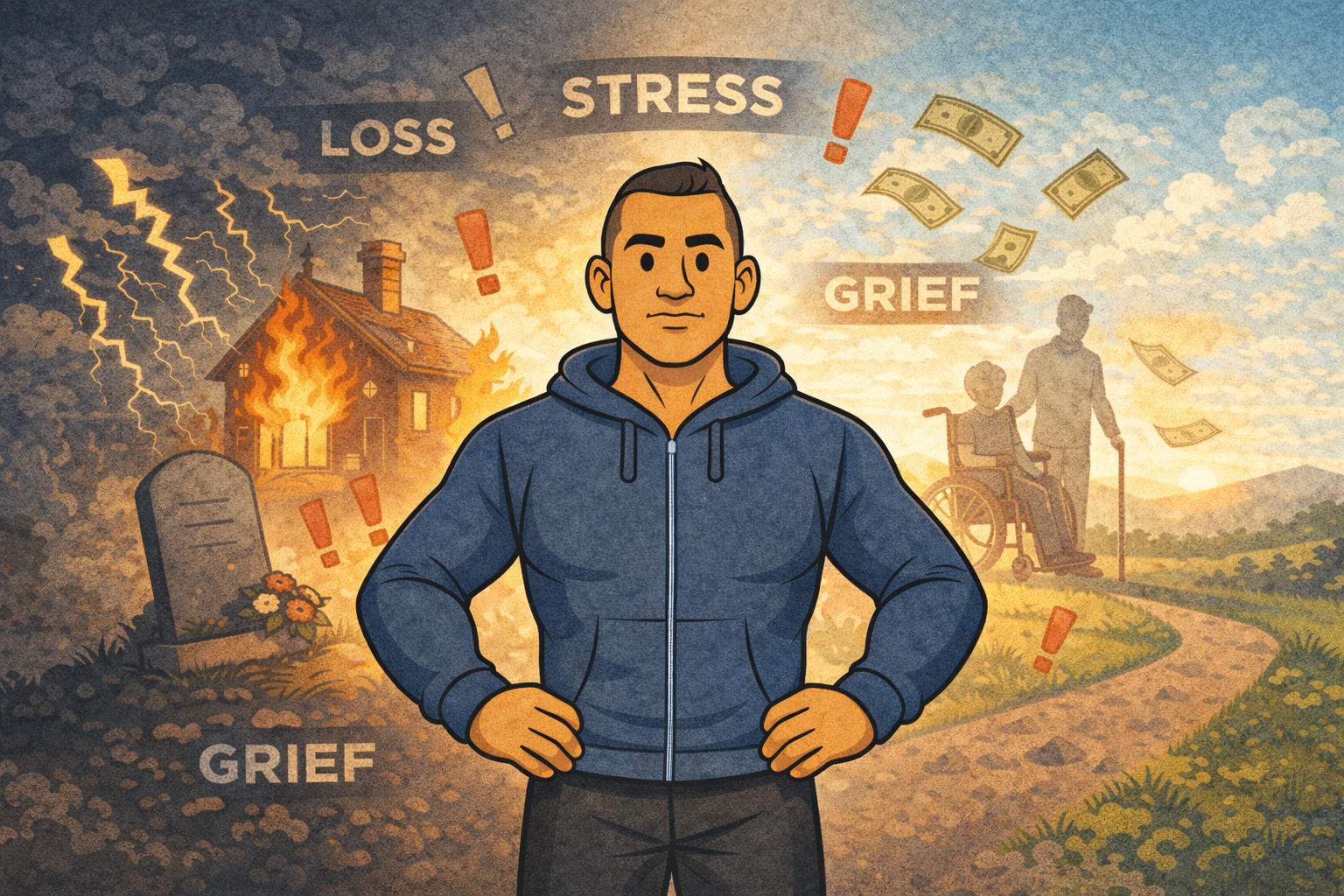
Why True Health, Strength, and Longevity Are Built for the Inevitable, Not the Ideal
“Life doesn’t ask if you’re ready.
It asks who you’ve become.”
INTRODUCTION — THE QUESTION NO ONE PREPARES FOR
Most people train for aesthetics.
Some train for performance.
A few train for longevity.
But almost no one trains for life.
And yet, life is the one test no one escapes.
Loss.
Stress.
Illness.
Aging parents.
Broken relationships.
Financial pressure.
Emotional exhaustion.
Unexpected hardship.
Moments that don’t care how disciplined you are.
The question isn’t whether these moments will come.
The question is:
Who will you be when they do?
Longevity is not just about living longer.
It’s about becoming someone who can handle life — physically, mentally, emotionally, and spiritually — without breaking.
A TRUTH I LEARNED THE HARD WAY
I used to think strength meant pushing through everything.
Ignore the pain.
Outwork the stress.
Stay relentless.
Never slow down.
And for a long time, that version of strength carried me.
Until it didn’t.
Life eventually applied pressure I couldn’t out-train:
Losing my business
Watching my home burn down
Divorce
Financial instability
Losing my father
Caring for my elderly aunt
The pain of parental alienation
Losing the relationship with my daughter — the very person who once saved my life
Living in survival mode
Battling binge eating cycles
Carrying grief silently while still showing up for others
That’s when I realized something sobering:
The goal of health isn’t to avoid hardship.
It’s to be strong enough to survive it — and still move forward.
WHAT “HANDLING LIFE” ACTUALLY MEANS
Becoming someone who can handle life doesn’t mean:
You don’t feel pain
You don’t struggle
You don’t fall apart sometimes
It means:
You recover faster
You don’t abandon yourself
You adapt instead of collapse
You ask for help when needed
You regulate instead of react
You keep showing up — even quietly
That is real strength.
And that kind of strength is built intentionally.
THE SCIENCE: WHY RESILIENCE PREDICTS LONGEVITY
1. Psychological resilience lowers mortality risk
Long-term studies show that people with high resilience:
Have lower inflammation
Experience less cardiovascular disease
Recover faster from illness
Maintain independence longer
Show slower cognitive decline
Did You Know?
Psychological resilience is a stronger predictor of lifespan than VO₂ max or body fat percentage.
2. Stress tolerance protects the nervous system
Chronic stress accelerates aging.
But people who develop stress adaptability:
Maintain healthier cortisol rhythms
Preserve muscle mass
Sleep more deeply
Regulate blood sugar better
They don’t eliminate stress — they handle it.
Did You Know?
The ability to return to baseline after stress is more important than avoiding stress altogether.
3. Physical capacity equals survivability
Strength isn’t just aesthetic.
Strength allows you to:
Get up after falling
Carry groceries
Care for loved ones
Handle illness
Recover from injury
Maintain independence
Did You Know?
Loss of muscle mass is one of the strongest predictors of early mortality after age 50.
Training your body is training your future self.
WHY COMFORT IS THE ENEMY OF LONGEVITY
Modern life removes discomfort.
But growth — physically and psychologically — requires controlled discomfort.
Strength training is discomfort.
Learning boundaries is discomfort.
Changing habits is discomfort.
Facing truth is discomfort.
Letting go of old identities is discomfort.
Avoiding discomfort doesn’t create safety.
It creates fragility.
Did You Know?
People with low stress tolerance experience higher anxiety, depression, and physical illness later in life.
Longevity belongs to those who can tolerate discomfort without becoming overwhelmed by it.
WHAT I COACH NOW — AND WHY
I no longer coach people to just “get in shape.”
I coach people to:
Build stress tolerance
Preserve muscle
Improve sleep
Regulate emotions
Develop structure
Stay adaptable
Become harder to break
Because life doesn’t reward perfection.
It rewards capacity.
THE FIVE TRAITS OF PEOPLE WHO CAN HANDLE LIFE
1. They train consistently, not excessively
They don’t disappear when life gets hard — they scale.
2. They prioritize recovery
Sleep, hydration, nutrition, and downtime are non-negotiable.
3. They regulate emotions instead of suppressing them
They feel deeply but don’t let emotions control behavior.
4. They build systems, not dependence on motivation
They show up even when motivation is gone.
5. They stay connected
Isolation weakens resilience. Connection strengthens it.
Did You Know?
Strong social ties reduce mortality risk by nearly 50%.
BECOMING THIS PERSON IS A DAILY PRACTICE
You don’t wake up one day “ready for life.”
You become ready by:
Training your body
Training your mind
Training your recovery
Training your awareness
Training your response to stress
This is why health is lifelong.
Not because it’s exhausting —
but because it prepares you for everything else.
A FINAL REFLECTION
Life will test you.
It will strip things away.
It will change the rules.
It will break your plans.
It will challenge your identity.
The goal isn’t to avoid those moments.
The goal is to become someone who can stand in them —
grounded, resilient, capable, and still moving forward.
Longevity isn’t about how long you live.
It’s about how well you live through what life brings.
WORK WITH COACH RAY
If you’re ready to stop chasing perfection and start building real capacity — physical, mental, emotional — I can help you become someone who can handle life.
📩 amrapfitness@hotmail.com
REFERENCES
National Institute on Aging
Harvard School of Public Health
American Psychological Association
Journal of Behavioral Medicine
Blue Zones Research