Progress Is Not Linear — And That’s Why It Works
Why Setbacks, Plateaus, and Regressions Are Not Failures, But the Engine of Long-Term Growth
“If progress were linear, everyone would succeed. Growth happens in the pauses, the regressions, and the moments we choose not to quit.”
INTRODUCTION — THE LIE WE’VE ALL BEEN SOLD
We’ve been conditioned to believe that progress should look like a straight line.
Better every week.
Leaner every month.
Stronger every year.
More disciplined with time.
Less emotional with age.
And when it doesn’t?
People assume something is wrong.
They panic.
They tighten the rules.
They train harder.
They eat less.
They lose patience.
They lose confidence.
Or worse — they quit.
But here’s the truth most people never hear:
If your progress isn’t linear, you’re probably doing it right.
A PERSONAL PATTERN I HAD TO ACCEPT
There were years when my progress felt unstoppable.
And there were years when it felt like everything I built disappeared.
Strength came… then faded.
Leanness appeared… then vanished.
Confidence grew… then fractured.
Momentum built… then collapsed.
At first, I treated these moments like personal failures.
But over time — especially through loss, grief, financial instability, injury, emotional stress, and rebuilding — I realized something critical:
Regression wasn’t the enemy.
Resistance to regression was.
Every time I tried to force linear progress, my body pushed back.
Every time I allowed adaptation, growth eventually followed.
THE SCIENCE: WHY LINEAR PROGRESS IS A MYTH
1. Biology adapts in waves, not straight lines
The human body responds to stress in cycles.
Train → adapt → plateau → recover → grow.
This applies to:
Strength
Fat loss
Metabolism
Nervous system regulation
Hormones
Mental resilience
Did You Know?
Physiologists refer to this as nonlinear adaptation, and it’s the foundation of long-term performance and longevity.
When people expect constant upward progress, they override recovery — and adaptation breaks down.
2. Plateaus are signs of integration, not stagnation
A plateau isn’t your body quitting.
It’s your body catching up.
During plateaus:
Tissues remodel
Hormones stabilize
Neural patterns consolidate
The nervous system recalibrates
Growth doesn’t always look like change — sometimes it looks like stillness.
Did You Know?
Most biological improvements happen after stress, during rest and integration — not during effort itself.
3. Stress accumulation distorts progress perception
When stress rises:
Fat loss slows
Strength fluctuates
Sleep worsens
Cravings increase
Mood becomes unstable
People assume they’re regressing — but often, they’re just overloaded.
This is especially common during:
Emotional hardship
Financial strain
Family stress
Sleep deprivation
Major life transitions
The body prioritizes survival before aesthetics.
That’s intelligence — not weakness.
WHY LINEAR THINKING DESTROYS LONGEVITY
When people expect linear results, they:
Chase extremes
Ignore warning signs
Push through injury
Undereat
Overtrain
Suppress emotions
Judge themselves harshly
Over time, this accelerates:
Burnout
Injury
Hormonal dysfunction
Disordered eating
Emotional detachment
Quitting altogether
Did You Know?
People who experience repeated cycles of extreme dieting and rebound gain show higher long-term inflammation markers — a known predictor of reduced lifespan.
Longevity favors patience, not pressure.
WHAT NONLINEAR PROGRESS ACTUALLY LOOKS LIKE
Real progress looks like:
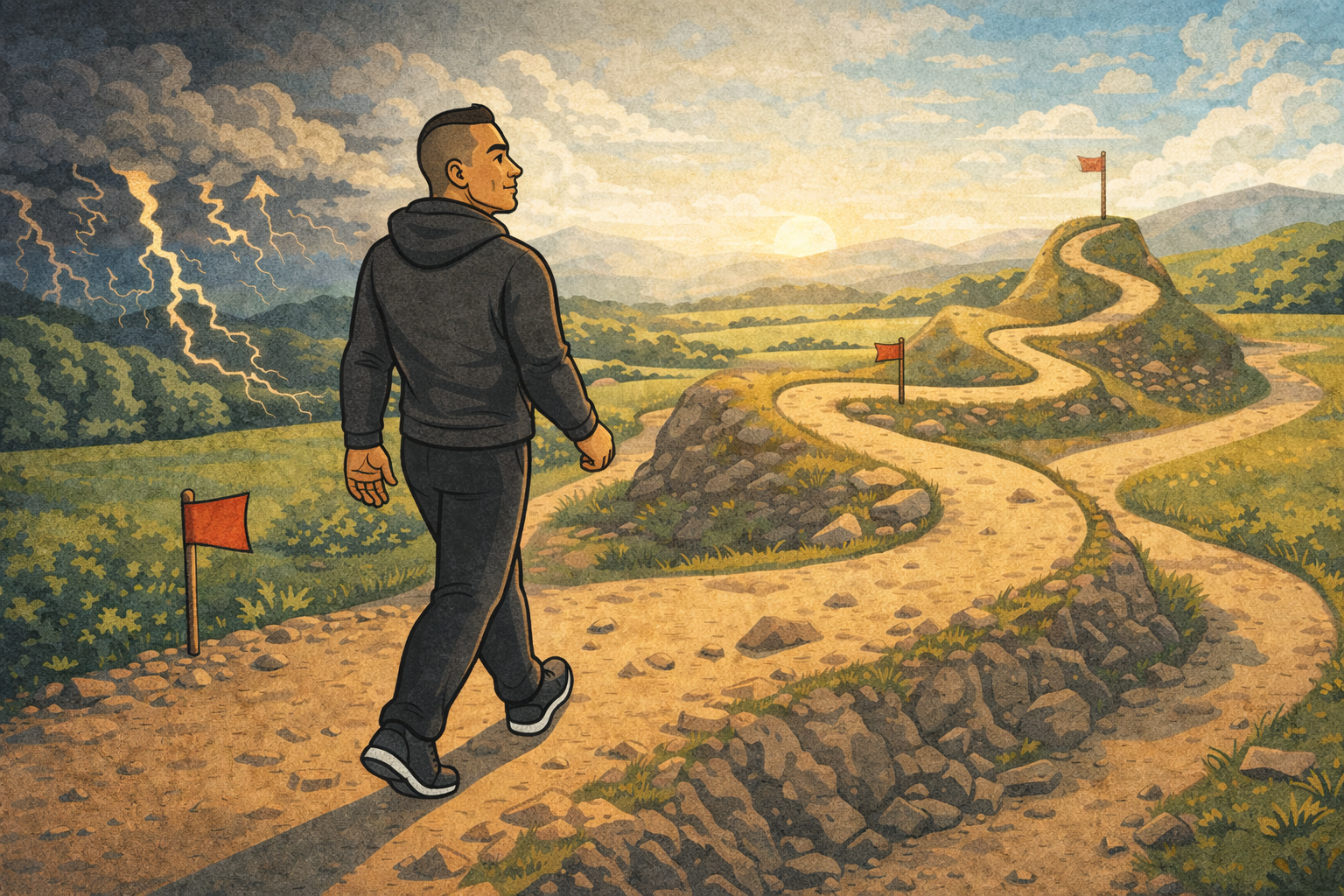
Two steps forward, one step back
Strong months followed by quiet ones
Periods of intensity followed by restoration
Growth interrupted by grief
Momentum rebuilt slowly
This isn’t failure — it’s adaptation.
The people who live the longest aren’t those who avoid setbacks.
They’re the ones who don’t abandon themselves during them.
HOW I COACH THROUGH NONLINEARITY
When clients hit plateaus or regressions, we don’t panic.
We ask:
What’s changed in life?
How’s sleep?
How’s stress?
How’s recovery?
How’s emotional load?
What expectations need adjusting?
Often, the solution isn’t doing more.
It’s doing less — more intelligently.
Did You Know?
Studies show that strategic deloads and recovery phases improve long-term strength, fat loss, and adherence more than constant progression attempts.
REDEFINING SUCCESS IN REAL TIME
Success isn’t:
Always getting leaner
Always lifting heavier
Always being motivated
Always improving metrics
Success is:
Returning after setbacks
Adjusting without quitting
Listening instead of forcing
Maintaining identity during chaos
Protecting long-term health
This mindset shift alone improves:
Adherence
Emotional resilience
Stress regulation
Body composition outcomes
Longevity markers
DID YOU KNOW? (PAUSE HERE)
Regression is often preparation for growth
Recovery drives adaptation
Stress masks progress
Plateaus prevent injury
People who allow flexibility stay consistent longer
A LONgevity FRAMEWORK: STAYING IN THE GAME
If you want long-term health:
Stop chasing straight lines
Stop comparing chapters
Stop judging temporary setbacks
Start measuring commitment, not speed
Progress compounds when you don’t quit.
CLOSING — A MESSAGE FOR THE READER
If you feel stuck right now…
If progress feels slow…
If life has interrupted your momentum…
You’re not failing.
You’re adapting.
And adaptation is how humans survive — and thrive — over time.
Longevity doesn’t belong to the fastest climbers.
It belongs to those who keep moving, even when the path bends.
WORK WITH COACH RAY
If you want help navigating plateaus, setbacks, and real-life stress without losing momentum, I can help you build a sustainable path forward.
📩 amrapfitness@hotmail.com
REFERENCES
American College of Sports Medicine
Journal of Applied Physiology
National Institute on Aging
Harvard Medical School
Blue Zones Research