
Gratitude Rewires the Brain and Extends Your Life
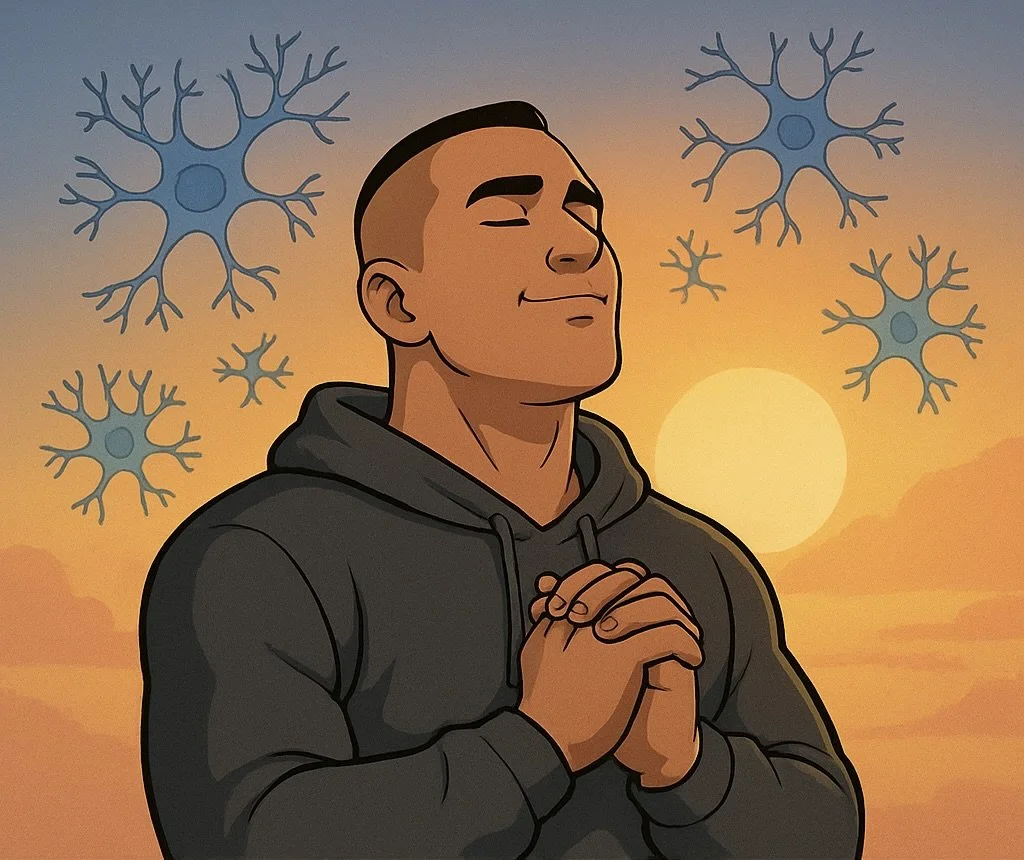
“It is not joy that makes us grateful; it is gratitude that makes us joyful.”
— Brother David Steindl-Rast
Introduction
Gratitude is often seen as a simple expression of thanks, but modern neuroscience now confirms what many ancient traditions understood: gratitude is medicine. It changes the chemistry of the brain, reshapes emotional patterns, and supports long-term health in profound ways.
Coach Ray Traitz, who has experienced extreme adversity and rebuilding throughout his life, discovered that shifting his mindset toward gratitude didn’t just make him emotionally stronger — it made him physically healthier.
When Ray began focusing on what remained instead of what was lost, something clicked:
Positive things began to enter his life at a rate he hadn’t experienced in years.
Energy improved.
Stress decreased.
Recovery deepened.
Hope returned.
And the science backs this up.
Gratitude has been shown to:
Lower cortisol by up to 23%
Reduce inflammatory markers
Increase heart rate variability (HRV), a key marker of longevity
Improve sleep quality
Strengthen emotional resilience
Gratitude is more than a feeling — it’s a physiological shift.
How Gratitude Rewires the Brain
Practicing gratitude lights up the brain’s prefrontal cortex, the center responsible for emotional regulation, decision-making, and perspective-taking.
It also reduces activity in the amygdala, the fear center, which lowers chronic stress and improves calmness.
Neuroscientists call this neuroplasticity — the ability of your brain to adapt, grow, and rebuild. Gratitude is one of the fastest ways to trigger that healing.
Key Brain Benefits:
Reduced stress response
Enhanced memory and cognition
Improved emotional balance
Did You Know?
Researchers at UCLA discovered that people who practiced gratitude daily for 14 days had measurably stronger neural networks associated with empathy, resilience, and long-term well-being.
Gratitude and Longevity: The Biological Link
Longevity isn’t just determined by physical fitness — emotional health plays an enormous role. Chronic stress accelerates aging, weakens the immune system, and damages DNA through oxidative stress.
Gratitude counteracts all of that by:
Decreasing systemic inflammation
Improving sleep (one of the biggest longevity predictors)
Strengthening the immune system
Enhancing metabolic health
Reducing the risk of anxiety and depression
Improving cardiovascular function
This isn’t “positive thinking.”
It’s biological transformation.
Coach Ray’s Personal Journey with Gratitude
Ray has survived what would shatter most people — losing his business, watching his house burn to the ground, experiencing divorce, financial hardship, alienation from his son, caring for an elderly aunt, the death of his father, and now the heartbreaking strain placed on his bond with his daughter. He has fought through binge-eating episodes, emotional trauma, and overwhelming stress — yet he stands here today stronger than ever.
Gratitude didn’t erase the pain.
It gave him the strength to move forward through it.
It became the anchor that helped him:
Stay disciplined in training
Stay present with students and clients
Stay grounded through grief
Stay hopeful for the future
Ray’s message is simple:
“Gratitude won’t remove life’s storms — but it will teach you how to walk through them without losing yourself.”
How to Practice Gratitude for Longevity
Here are simple, powerful tools Ray uses for himself and his clients:
1. The Morning Gratitude Reset
Write down 3 things you're grateful for before checking your phone.
2. Gratitude Walks
Walk outside and think of one positive thing in each area of life:
Health
Family
Work
Personal growth
3. The Evening Release
Before bed, acknowledge one thing you did well that day.
This lowers cortisol and improves sleep quality.
4. Express It
Tell someone you appreciate them.
A text. A note. A call.
Connection heals at the cellular level.
Why Gratitude Helps You Live Longer
A grateful mindset:
Protects your heart
Keeps blood pressure lower
Strengthens immunity
Improves digestion
Enhances mental clarity
Deepens sleep
Reduces emotional burnout
All of these contribute to a longer, healthier life with more purpose, more joy, and more resilience.
Did You Know?
A Harvard study following participants for 80 years found that individuals who practiced optimism and gratitude lived 7–10 years longer on average.
Coach Ray’s Reflection
“For years, I chased strength, physique, and performance — thinking that success lived only in the body. But longevity is built in the mind first. Gratitude turned my pain into power and my struggle into purpose. It brought light into places I thought would stay dark forever.”
Gratitude doesn’t deny hardship.
It gives you the strength to rise above it.
Work With Coach Ray Traitz
If you want a coach who understands the science of longevity and the emotional realities of transformation, Ray brings both expertise and lived experience.
He helps clients build:
Stronger bodies
Healthier minds
Better habits
Deeper purpose
Long-term resilience
📧 Contact: amrapfitness@hotmail.com
References
UCLA Mindfulness & Brain Health Research (2023)
Emmons, R. “The Science of Gratitude.” University of California.
Harvard Adult Development Study (2022)
Davidson, R. Center for Healthy Minds
Journal of Personality and Social Psychology (2020)